
Talking Small Business Investing; Race for FDIC Chief; Firing Commissioners
Capitol Account: Free Weekly Edition
Crypto dominated the regulatory news this week, as lawmakers rush to pass legislation spelling out the rules for stablecoins. The House Financial Services Committee approved its bill on Wednesday, with a handful of Democrats signing on. The banking industry wasn’t thrilled, though it has been keeping mum. Meanwhile, the SEC issued guidance that said many dollar-backed tokens fall outside of its jurisdiction.
We also took a look at how the securities regulator, now led by Republicans, is continuing to defend one of Gary Gensler’s major rulemaking achievements in court. Some market participants aren’t thrilled. On the personnel front, Paul Atkins is now one step closer to confirmation as the agency’s chairman. He and OCC pick Jonathan Gould were approved by the Senate Banking Committee on party-line votes.
The White House’s roster of regulators, however, has one glaring hole: the FDIC. But the race for the chairman’s seat is heating up. Being an appointee these days at an independent agency, however, is not without peril — as we noted in a story that assessed a changing legal landscape in the wake of a lawsuit by two Democratic FTC commissioners challenging their ouster. For our Friday interview, we spoke with the head of a trade association for private equity and venture capital firms that invest in small businesses.
Thanks for reading our digest of articles published this week. To stay on top of the news, click the button below and subscribe to the daily newsletter.
Friday Q and A: Small business investment is like apple pie: It’s hard to find someone who doesn’t want more of it. Yet it’s often the big companies that get all the attention in the policy arena (and, admittedly, in the media as well). Even the non-controversial regulatory fixes that little firms desire can struggle to gain traction.
Few people understand that better than Brett Palmer, president of the Small Business Investor Alliance. The trade group lobbies for private equity, venture capital and other funds that invest in small, non-publicly traded companies. And it's not easy to get its agenda to the top of Washington’s to-do list. But Palmer sees an opportunity with Republicans now in control. Earlier this week he appeared before the House Small Business Committee to make his case.
Read on to hear the changes SBIA members hope to see — from the SEC and Congress — to help steer more private capital to smaller investment vehicles. Palmer also weighs in on Donald Trump’s plans for cuts at agencies like the Small Business Administration and the president’s push to change to the tax treatment of carried interest. What follows is our (lightly edited and condensed) conversation.
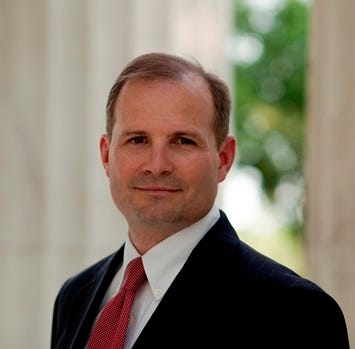
Capitol Account: How did you get your start in Washington?
Brett Palmer: I worked in the Speaker's Office for Newt Gingrich, in his policy shop, as a very, very young buck. There was no better place in the world to learn everything about public policy on Capitol Hill than being in that office. It was a dynamic time, it was the Republican revolution…I just tried to be a sponge. I'm a huge believer in being a lifelong learner. And man, that was a PhD in Congress.
CA: You later had a stint at the Commerce Department and worked for an association representing state insurance regulators. What led you to your current job?
BP: I didn't want to be on the regulatory side of the house forever. I was interviewed here. It was supposed to be a half an hour [and it] ended up being two hours. We clicked. I liked the way they think, I liked the way they approach things. I liked their ethics, I liked their mission...It's been 17 years – I started with one employee. I've got 19 now.
CA: What does the SBIA do?
BP: My mother-in-law asks me that every time she sees me…We're a trade association that's been around since 1958 [and] represents people that invest in American small businesses. We are a bit of the alphabet soup of the private capital markets: small business investment companies, rural business investment companies, business development companies, conventional private equity, conventional venture, as well as their institutional investors.
CA: How do you fit in with the other Washington groups that work for PE and venture firms?
BP: We represent the smaller end of the spectrum – by a lot…But we have a lot of things that are aligned.
CA: What kind of companies are your members investing in?
BP: Everything from metal benders to business-to-business services. Industrial services like [firms] that make the chemicals that seal roofs of commercial buildings or things like that. The sort of businesses that aren't sexy for Silicon Valley and that are way too small for Wall Street.
CA: There’s not a member of Congress who doesn’t profess to love small businesses. Does that make your job easy?
BP: Small business is generally an afterthought in public policy. Everyone likes it. But bigger companies have bigger concentrations of employees. They have bigger lobbying heft. Everyone wants to support small business, it's just harder to do. They're more complicated. They're more diverse geographically. They're more diverse in their needs.
CA: That said, the president seems pretty aligned with your agenda.
BP: I do think that our members are exactly what this administration wants to succeed. They want investments in small businesses. They want investments in manufacturing. They want investments in areas of the country that have otherwise been forgotten. And that's what we do. We've had a very receptive audience with this administration.
CA: It seems that private equity has become a negative term in Washington, associated with rich people pillaging companies. Will that change now that Republicans are running things?
BP: It's worth noting that for small business investors, the only way they can make money – and I do mean the only way – is to grow the small business. If you have a small business and you cut, there's nothing left…All the hard decisions are [in] what's the best way to grow? And that's why we have pretty much universal support – Republican, Democrat, House, Senate.
CA: The new administration is pushing to eliminate a lot of the federal workforce. Are you worried about potential cuts at the SBA?
BP: Yes. I was the second meeting that the [new SBA] administrator took and they reached out to me, which tells you what their priorities are…She is sharp, and she understands finance. She understands investing. I know that they're prioritizing what we're doing, which is great. Are there better ways? You bet there are. Was the SBA in some ways off track? Yeah.
CA: What’s an example?
BP: Why is the SBA spending huge amounts of time and resources registering people to vote? That's not what they do. They were supposed to be helping people grow their business and access capital and educate young people and the entrepreneurs about how to plug into these markets and get loans. Reimagining the SBA back to its core mission is something that I think is exciting…(Friday)
Click here to subscribe and read the rest of the interview.
Thanks for reading. Follow us on X @CapitolAccount and on LinkedIn by clicking here. We’re always looking for stories, so if you have any suggestions on what we should cover (or comments about Capitol Account), shoot us a note. Rob can be reached at: rschmidt@capitolaccountdc.com and Ryan at rtracy@capitolaccountdc.com. If somebody forwarded this to you and you’d like to subscribe, click on the button below. Please email for information on our special rates for government employees, academics and groups: subscriptions@capitolaccountdc.com.
Jockeying for the Nomination: President Trump has picked leaders for all the top financial regulators, save one: the FDIC. The delay in choosing a permanent chairman for the banking agency is a bit of a mystery, as are the White House’s ultimate intentions. But that hasn’t stopped a flurry of speculation over the choice, which many say is down to two candidates, Acting FDIC chief Travis Hill and Acting Comptroller Rodney Hood. The perceived horse race has not surprisingly captivated Washington’s financial regulatory community.
Sources say that both men are eager for the job – and their competitive spirits are stirring. The result has been a rapid series of moves to showcase their Trump bona fides: welcoming crypto assets back into the banking system, taking steps to end “debanking” and returning workers to the office, to name a few. The situation is also a bit awkward because so much of the FDIC and OCC’s rules are closely tied, meaning the two leaders are constantly working together. (They are said to be on good terms.)
Of the two, Hood is seen as making the more overt play, perhaps because the clock on his OCC tenure is ticking now that Gould, is awaiting a final Senate vote. In the meantime, Hood has been regularly firing off press releases trumpeting his regulatory rollbacks. He’s also enthusiastically hit the speaking circuit of industry conferences. “Acting but not inactive,” is how he often describes his approach.
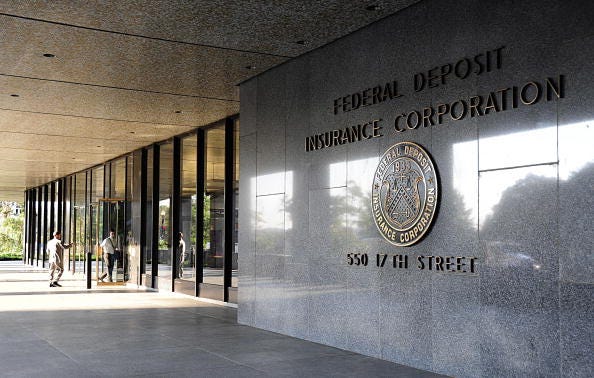
Sources say that Hood’s efforts have not gone unnoticed among Hill’s backers – especially since several of his policy shifts were already the subject of joint agency discussions. That’s created a feeling in some quarters that the acting comptroller has been front-running colleagues with his announcements as part of a strategy to bolster his chairman chances.
Not to be outdone, Hill has kept up a steady stream of his own proclamations. He’s slightly favored by some industry representatives, who view him as more of a known quantity after his service as FDIC vice chair. His supporters also point to his experience with complex rules like the Basel endgame that need to be addressed in the coming months.
Still, because Hill and Hood have generally similar views, banking groups aren’t pushing hard for either candidate. “I don’t know who wins,” says one financial executive. “You could literally toss a coin.”
One tea leaf in Hill’s favor is the fact that the president included his name on a list of acting agency appointees on Inauguration Day, even though that technically wasn’t necessary. (Hill had been automatically promoted to the top job as a result of Martin Gruenberg’s resignation.) On the other hand, if Trump were inclined to nominate Hill for the permanent role, he could have done so already.
Hood is said to have a friend in Senate Banking Committee Chairman Tim Scott, a fellow black Republican from the Carolinas. The senator took the opportunity to praise the acting comptroller several times during last week’s confirmation hearing for Gould. Hood is also said to be on good terms with Scott Bessent, who has played a significant role in choosing financial regulatory nominees. The Treasury secretary was on the guest list for Hood’s black-tie birthday party earlier this year. Two other Trump regulators in waiting – Atkins and Brian Quintenz – were also in attendance, sources say.
That’s not to say Hill is without backers in the Capitol…(Thursday)
Click here to subscribe and see the full story.
A New Normal? For decades, commissioners at independent agencies have operated on the presumption that they can’t be fired at will by the president, even one of a different political stripe. Sure, there’s been an intellectual debate about the wisdom of that approach. But it was generally regarded as the law of the land. Until now.
Less than three months into his second term, Trump has summarily dismissed appointees at the FTC and two other multi-member boards. And thus far, federal judges have backed him up. The Supreme Court will have the last word, but many observers expect its conservative majority to side with the president, given their conclusions in similar cases. It may take some time for it all to shake out, but there’s little doubt that the regulatory landscape has wildly shifted. Members of the SEC, CFTC, FDIC and a number of other agencies, it seems, can no longer count on serving out their terms.
"The only interesting question left is whether the Federal Reserve’s monetary policy independence can be saved," says Robert Jackson Jr., a former SEC commissioner who is now a law professor at New York University.
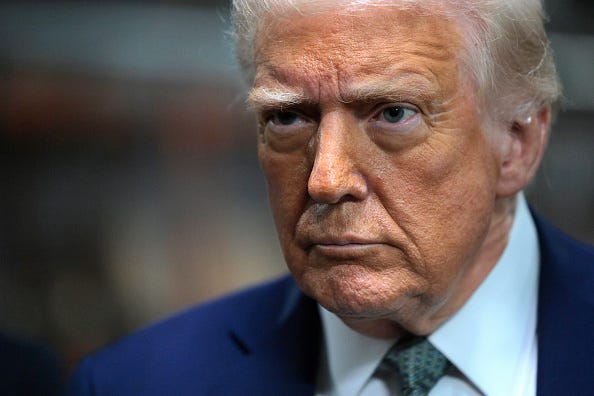
The upheaval is happening so swiftly that Washington is just beginning to sort through all the implications. Defenders of Trump’s assertion of power hail it as a way to rein in an unaccountable bureaucracy. Critics see it as ushering in an era of volatile policy where dissenting voices have less of a platform. Both sides agree the government is entering uncharted territory, at least in modern times.
“What we don't know yet is how regulatory agencies and their leaders will respond to the constant pressure of removal for political reasons,” Jackson observes.
What follows is a breakdown of the issue and its potential ramifications…(Monday)
Click here to subscribe and read the full article.