
Talking With Finra's Cook; Ending Quarterly Reports Won't Be Easy; Lobbying Fight over Stablecoins Shifts to Agencies
Capitol Account: Free Weekly Edition
The Trump administration’s embrace of crypto isn’t sitting well with the established financial industry, a dynamic that was on full display this week. Banking trade groups went public with their opposition to the wave of digital asset firms applying for trust charters, warning the OCC that lawsuits may be in the offing. Comptroller Jonathan Gould doesn’t exactly seem sympathetic to their arguments.
Meanwhile, the lobbying fight over stablecoins has shifted to the regulators. A Treasury Department request for comments on the rule writing drew a flood of responses and rekindled some heated debates.
The SEC remains quiet during the government shutdown, but we reported on a pressing issue for the chairman: ending mandatory quarterly financial reporting for public companies. Recent history shows that it won’t be easy. For our Friday interview, we spoke to the CEO of Finra about how the self-regulator is navigating the Republican takeover of Washington and legal challenges to its constitutionality.
Thanks for reading our free digest of articles published this week. Click the button below to become a paid subscriber and get our full coverage.
Friday Q and A: It’s a difficult moment to be in charge of Finra, the front-line overseer of the brokerage industry. Lawsuits challenging the self-regulator’s constitutionality, backed by conservative groups, are percolating through the courts. There’s a Republican-sponsored bill in the House that seeks to strip away its powers. And the new SEC chairman has been a longtime critic.
Finra CEO Robert Cook, however, isn’t playing defense. Instead, he’s adjusting to the times – and seemingly taking a page out of the Republican playbook. Most notably, he launched a wide-ranging initiative in April to “modernize” rules and “reduce unnecessary compliance burdens” on the SRO’s industry members.
We sat down with Cook this week to discuss the effort, dubbed Finra Forward, and learn what changes may be in store. The veteran securities lawyer also offered a strong rebuttal to the deep-state critics who argue that his organization is an unaccountable arm of the SEC. Overall, he made clear that Finra, which has been marking its 85th anniversary this year, intends to celebrate many more. What follows is our (lightly edited and condensed) conversation.

Capitol Account: There’s been a lot of debate, including in the courts and Congress, about what exactly Finra is and does. How do you explain it?
Robert Cook: Finra is a unique and integral part of our regulatory system…We’re a membership organization, and our mission is to work with our members and protect investors, promote market integrity and facilitate vibrant capital markets in which everyone can participate with confidence. That’s the big picture.
CA: How is Finra structured?
RC: We’re a private, not-for-profit Delaware membership corporation. We’re not part of the government. We’re not funded by the government. We’re not appointed by the government. We weren’t created by the government…We’re registered with the SEC as a National Securities Association.
CA: What does it mean to be a self-regulator?
RC: We have to adopt rules for our members, broker-dealers, to govern their conduct and the conduct of their people. And we have to examine and oversee compliance with those rules. It also means that as an SEC registrant, we’re subject in turn to SEC oversight. The SEC has to approve all of our rules. They do comprehensive examinations of us…They can take appeals of our adjudicatory decisions.
CA: What’s Finra’s annual budget?
RC: It’s about $1.5 billion.
CA: And how many employees?
RC: About 3,800.
CA: Does the SEC have a say about Finra’s budget?
RC: They don’t have approval authority. Obviously, as part of their examination oversight, they can ask questions about how we’re managing our finances, and [whether] we are adequately resourcing our regulatory mission. But our budget is set by the [Finra] board of governors. Our fees are filed with the SEC, and those filings include information about our budget.
CA: Conservatives have argued that Finra is essentially another SEC – and part of the administrative state. What’s your response?
RC: Think about how we operate. We have industry people sitting on the board, at the table when we’re making regulatory policy decisions. I report to the board. The board chair, my immediate boss if you will, is an industry governor – Scott Curtis of Raymond James – elected to the board by his peers in the industry. [It’s] a governance arrangement that’s really intended to make sure that we are deeply engaged with the membership…Very different from the way a government agency would work.
CA: That said, the majority of Finra’s board comes from outside the brokerage industry. Some have called for that to be changed. What do you think?
RC: That’s a conversation to be had…Personally, I don’t know that it makes that big a difference at the margin. Yes, [the board] is majority public. I sit in all the meetings, it’s not like you’ve got public governors on one side and industry governors on the other. We try to work by consensus. If there’s a significant minority of dissent, we often defer a decision or try to figure out a way to get to the right result. I think I could count on my fingers on my two hands the number of times since I’ve been on the board that [a] decision hasn’t been unanimous.
CA: There are lawsuits challenging the constitutionality of Finra on several different grounds, including that it’s improperly exercising government power and that the board members and judicial officers should be appointed by the president. What do you make of these arguments?
RC: The constitutional questions have come up…over many years. Frankly, this isn’t particularly new. There’s a long line of precedent…The concerns are really about – and I’m not trying to discount them, I think they’re reasonable questions to ask – accountability. Ultimately are we exercising some type of authority from the government that is not accountable? But I would submit that we are very accountable.
CA: Finra has argued in some of its court filings that an adverse ruling could pose an `existential threat’ to U.S. financial oversight. Could the organization just cease to exist?
RC: How big a threat it is depends on the case…There are things that, if we lose, could be done to change the system. Some of those things might be things we could do. Some of those things might be things the SEC could do, or some of those things might be things Congress would need to do. [So] we’re hopefully preserving this very valuable structure where the industry’s involved in meaningful ways in its own regulation.
CA: Can the SEC take on all of Finra’s responsibilities? Or does the commission need Finra?
RC: We have 3,200 firms, we have 630,000 individuals who are registered with us. We maintain a registration and disclosure system for all these people. We maintain a rule book for them. We conduct examinations and investigations. We provide them with compliance tools and resources. We operate utilities for reporting of trades. We have developed…sophisticated technology to be able to oversee the markets…Is that better done by the SEC, by a government agency, than a private sector agency? And do we want the taxpayer to pay for it? The SEC would need, I don’t think there’s any question, a significant increase in their budget…(Friday)
Click here to subscribe and read the complete interview.
Thanks for reading. Follow us on X @CapitolAccount and on LinkedIn by clicking here. We’re always looking for stories, so if you have any suggestions on what we should cover (or comments about Capitol Account), shoot us a note. Rob can be reached at: rschmidt@capitolaccountdc.com and Ryan at rtracy@capitolaccountdc.com. If somebody forwarded this to you and you’d like to subscribe, click on the button below. Please email for information on our special rates for government employees, academics and groups: subscriptions@capitolaccountdc.com.
Quarterly Reporting: Prodded by a presidential social media post, Paul Atkins is looking to end a hallmark of the U.S. stock markets: mandatory quarterly financial reports by public companies. It’s unlikely to be an easy lift – and the SEC chief only has to look back a few years to see why.
Following a similar tweet from Donald Trump in 2018, then-Chairman Jay Clayton quickly got the ball rolling and solicited public feedback on potential changes. Suffice it to say, there was a lot of blowback. Opposition, detailed in comment letters sent in 2019, came from all corners of the financial industry, including brokers, asset managers and pension funds. Investor advocates, accountants and securities lawyers also were unhappy.
Not that Clayton thinks his successor should be deterred. In an interview, he says that the response also showed widespread support for scaling back what have become very lengthy documents. “There is no doubt that our current quarterly reporting system has been captured by disclosure that is tangential to, or has nothing to do with, company performance,” he notes. “Lots of the information that is in there is duplicative, irrelevant or superfluous.”
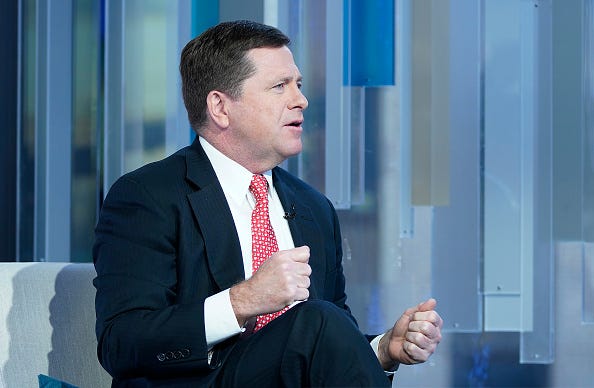
Clayton adds that he was eager to tackle the reforms himself, but the pandemic got in the way. Of course, the former chair is now the U.S. attorney for the Southern District of New York, so he won’t be dealing with the outcry. A look at some of the responses from the last go-round, however, is likely to be instructive for Atkins as he readies his proposal. Dozens of firms and advocacy organizations weighed in at the time, most urging caution.
“The public capital markets in the United States are the envy of the world,” wrote the Investment Company Institute, the main trade group for mutual funds. “This is due in no small measure to investor confidence in the information being reported by public companies” in quarterly filings.
The Managed Funds Association, which represents hedge funds, concurred. “Investor access to timely, reliable and material information about public companies is a core tenet of U.S. capital markets and the regulatory framework governing those markets,” it wrote, emphasizing that the SEC should maintain the current practice. Large, well-known firms like BlackRock, State Street, T. Rowe Price and Morningstar also defended the system.
Meanwhile, the broader business community, which has long complained about the management time and resources devoted to the disclosures, was split…(Tuesday)
Click here to subscribe and read the full article.
Same Fight, New Venue: With the GENIUS Act in the books, the battle over U.S. stablecoin policy has landed at the Treasury Department where banks and crypto companies are squaring off over how rules should be written. In some ways, the regulatory lobbying is likely to be more consequential than the effort to pass the law itself, as officials hammer out the details of how the tokens will be used – and which companies will be allowed to issue them.
The debate over implementing the stablecoin measure is rekindling a few bitter fights. Topping the list is the banking industry’s campaign to limit rewards on dollar-denominated tokens, a topic that generated a whole lot of back-and-forth in comment letters that were submitted to the Treasury this week. A review of the feedback on the agency’s advance notice of proposed rulemaking shows a host of strong views on other simmering issues as well, including how to regulate foreign issuers and the prospect of big technology companies getting into the business.
And there may be more to come. Due to the government shutdown, hundreds of comments have yet to be posted. What follows is a look at some of the contentious policy matters raised in letters that are publicly available.
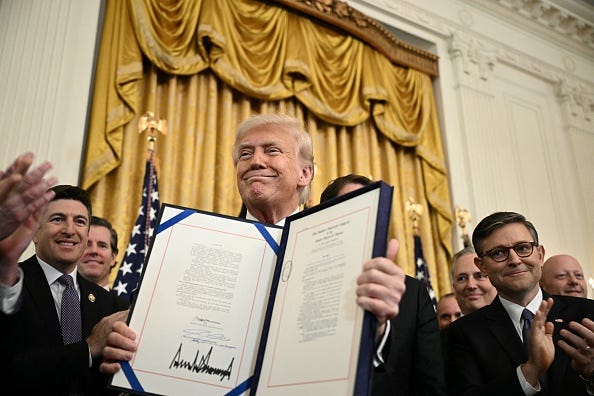
Interest: Banks are pleading with regulators to stamp out crypto companies’ ability to pay rewards on stablecoins, which many lenders see as a competitive threat. A key part of the law bars the “issuer” of a stablecoin from offering “any form of interest or yield.” Firms, though, are instead using their business partners, a la Coinbase’s move to pay a “reward” of nearly 4 percent to customers who hold Circle’s stablecoin on the platform. (Circle also shares revenue from the token with Coinbase.)
Lenders told the Treasury that those arrangements ignore Congress’ wishes. “The payments of interest or yield that the GENIUS Act prohibits should be viewed as effectively including any economic benefit that may be provided by an issuer, directly or indirectly (such as through an affiliate or partner),” wrote a coalition of five trade groups, including the American Bankers Association. They called on the department to “coordinate with federal and state payment stablecoin regulators to ensure that this prohibition has the broad scope that Congress intended and to prohibit evasion of the prohibition.”
The Conference of State Bank Supervisors concurred, arguing that the interest ban should “collectively capture all direct and indirect transfers of value to a holder.” Failure to enforce that standard, the state officials warned, “could trigger deposit flight out of the banking system and into payment stablecoins.” Even Better Markets, the liberal advocacy group, underscored that work-arounds like the Circle-Coinbase deal are a “clear violation of the GENIUS Act.”
Those contentions drew catcalls from the crypto industry. The Blockchain Association countered that allowing stablecoin holders to earn rewards “may prompt traditional banks to offer more competitive interest rates on deposits, which only works to consumers’ benefit.” And it pointed out that the Supreme Court’s Loper Bright decision requires regulations to “be fully consistent with the plain text of the statute, or risk being subject to a valid challenge.”
Others noted the irony of banking advocates arguing for “broad” statutory interpretation in the wake of the record number of lawsuits they filed against regulators in recent years. “In case after case, brief after brief, ABA has championed the bedrock principle articulated in Loper Bright: agencies receive no deference when interpreting statutes and must adhere to plain statutory language,” wrote J.W. Verret, a law professor at George Mason University. “ABA’s sudden embrace of expansive regulatory interpretation when it suits their competitive interests is not merely inconsistent; it undermines the very legal principles they have fought to establish.”
Compare and contrast: Tensions also flared over how to ensure that stablecoins operate by similar rules whether they are regulated at the federal level, by states or overseas. Under the GENIUS Act…(Wednesday)
Click here to subscribe and read the full article.