
Talking Prediction Markets; Dimon's Deep Regulatory Thoughts; Notable Omission in Bank Capital Plan
Capitol Account: Free Weekly Edition
It was a big week for the CFTC, which won the Third Circuit’s backing of its authority over prediction markets — the first time a federal appeals court has weighed in on the issue. The commodities regulator amped up its fight against state oversight by pressing a U.S. district judge to halt Arizona’s prosecution of Kalshi for violating state gaming laws. (He agreed on Friday night, giving the agency another victory.) Event contracts were also the subject of our Q&A with Robinhood’s new top derivatives lawyer.
SEC Chairman Paul Atkins traveled to Miami to tout red states’ corporate governance policies with the governors of Florida and Texas. Back in Washington, he named a new enforcement chief to replace the former military judge who quit after six months on the job. And the commission finally released its 2025 enforcement statistics showing a major drop in cases and fines under the new Republican regime. Democrats are likely to have a field day with the numbers.
Meanwhile, Wall Street’s most prominent CEO published his annual shareholder letter, which went into great detail about the state of bank regulation. Suffice it to say, he’s not thrilled with the recently issued Basel capital plan revisions. Nor are some progressive critics who are pointing out that the proposal has a surprising omission.
Thanks for reading our free digest of articles published this week. Click the button below to become a paid subscriber and get our full coverage.
Friday Q and A: With all the sturm und drang surrounding prediction markets, it’s easy to forget that they burst into the mainstream less than two years ago. So it’s not surprising that their regulatory framework is far from settled.
This week, we sat down with someone whose work on the issue spans more than a decade. Jon DeBord, Robinhood Markets’ head derivatives and banking lawyer, joined the brokerage a few weeks ago and is already enmeshed in the morass of court cases, legislation and expected agency rules that the industry is now confronting. The firm, which is the largest retail broker for event contracts, sees a bright future for the nascent market and is a strong supporter of the CFTC’s effort to impose oversight at the federal level.
DeBord argues that many event contracts – even on football and baseball games – aren’t gambling, but rather swaps that fall neatly into the CFTC’s remit. Still, he sees lots of potential action ahead at the agency, including decisions on what types of wagers are in the “public interest” and a review of consumer-protection rules. The requirements, he notes, apply differently to brokers like Robinhood and exchanges like Kalshi or Polymarket that offer direct access to investors. What follows is our (lightly edited and condensed) conversation.

Capitol Account: What did you do before joining Robinhood?
Jon DeBord: Most recently, I was general counsel at ForecastEx, which is an event contract market that is part of the Interactive Brokers Group. I was with Interactive Brokers before that, working with their [futures commission merchant] and their broker-dealer. Prior to that I was at Citigroup for about nine years…I worked partially on their futures and cleared swaps business. The other half of my time was spent with their trading desks, mostly the [interest rates] trading desk.
CA: And earlier in your career you were in government?
JD: I was at the CFTC. I was a counsel to [Republican Commissioner] Jill Sommers. Before working for her I was in DCR, the division of clearing and risk. I was there during Dodd-Frank when all the cleared swaps rules – mandatory clearing, mandatory trading – were written.
CA: What sparked your interest in prediction markets?
JD: When I was just figuring my way around the commission and didn’t know much of anything, one of my first assignments was to go to Nadex and do a [regulatory] review. Of course, now it is Crypto.com, but at the time they were called Nadex and were an event contract market. And I was like, what are these things?
CA: They were called binary options back then. What did you think?
JD: This seems pretty cool. This seems like something easy to understand. But it didn’t have a lot of mindshare – there was no volume.
CA: You weren’t jumping on the bandwagon?
JD: Honestly I didn’t really think about it again until I was at Interactive Brokers. [The firm’s founder] Thomas Peterffy had a real interest in prediction markets and had been working on one prior to me even being there. He had a lot of CFTC questions, and I’d chip in helping him out here and there. And then, in the fall of 2024 when the D.C. district court case went in Kalshi’s favor for government-control contracts, all of a sudden they became a huge deal.
CA: What’s it been like watching the growth of these markets?
JD: It’s been amazing. If you told me 15 years ago that I’d be doing something in event contracts, when I was sitting in some office in Chicago looking at Nadex documents, I never would’ve believed it.
CA: How does Robinhood view event contracts?
JD: Long term, we think it’s a very transformative product…One of the cool things about these products is that they allow for more targeted positions. Whether you have information based on what your expertise is, or you have a particular hedging need, this allows for very targeted hedging in a very simple way. To the extent that our customers want that, we want to offer it.
CA: So far, though, the main draw for the retail crowd has been wagering on sports.
JD: A lot of the volume is sports. I think in the long term, these markets are going to be huge, and are going to be very important across all products – economics, climate, elections, etc. At the outset, you never know what’s going to get trading volume going and attract use. Sports has been that thing.
CA: That has led to a conflict between the CFTC and states, which have traditionally regulated sports betting. Who should oversee this activity?
JD: My view is that sports event contracts fall within the Commodity Exchange Act.
CA: That aligns with CFTC Chairman Mike Selig, who has moved to preempt state laws and pledged to write federal regulations. Court battles are raging. How is Robinhood navigating this?
JD: Our goal is to follow the rules and work with the CFTC…Clarification is warranted here, with respect to sports, but also elections and weather, because it creates this sort of patchwork of regulation, which is exactly what the Commodity Exchange Act is meant to prevent.
CA: Explain that a bit.
JD: In the 1940s, traditional ag[riculture] futures were considered gambling, which is one of the impetuses for the predecessor of the Commodity Exchange Act. We’re seeing something comparable here. Let the courts play out. But I think the CFTC is doing a good job and trying to at least clarify the space sooner rather than later.
CA: Does Congress need to be involved or can this all be handled at the agency level?
JD: Congress has a role if they ultimately make a policy decision that they don’t want sports event contracts, or other kinds of event contracts. They can always amend the act. But as the act is written now, sports event contracts, to me, clearly fall within the scope. They’re not gaming…(Friday)
Click here to subscribe and read the full interview.
Thanks for reading. Follow us on X @CapitolAccount and on LinkedIn by clicking here. We’re always looking for stories, so if you have any suggestions on what we should cover (or comments about Capitol Account), shoot us a note. Rob can be reached at: rschmidt@capitolaccountdc.com and Ryan at rtracy@capitolaccountdc.com. If somebody forwarded this to you and you’d like to subscribe, click on the button below. For inquiries about advertising or information on our special rates for government employees, academics and groups, please email: jgallu@capitolaccountdc.com.
Deep Thoughts: Jamie Dimon is certainly feeling better about the regulatory climate than he was a year ago when Wall Street was still recovering from the Biden administration’s onslaught of rules. Surprisingly, however, the JPMorgan Chase CEO’s annual letter to shareholders showed he still has plenty to get off his chest about what’s going on in Washington.
“Change is clearly evident in bank regulations that will free up capital and liquidity,” Dimon wrote, crediting recent rule efforts from Donald Trump’s overseers with helping boost the economy. “It is fair to say that actions taken have clearly increased confidence and animal spirits.”
Even so, his review – which at times went deep into arcane policy details – was less than rosy. Dimon was especially displeased at the latest proposed changes to how big bank capital requirements are calculated. He branded some aspects of the package, which includes the Basel endgame, “frankly nonsensical” and “un-American.” And looking ahead, he offered a bulleted seven-point list of “smart, rigorous regulations and new ideas that could make the system safer and better.” Most of them don’t appear to be on the banking agencies’ current to-do lists.
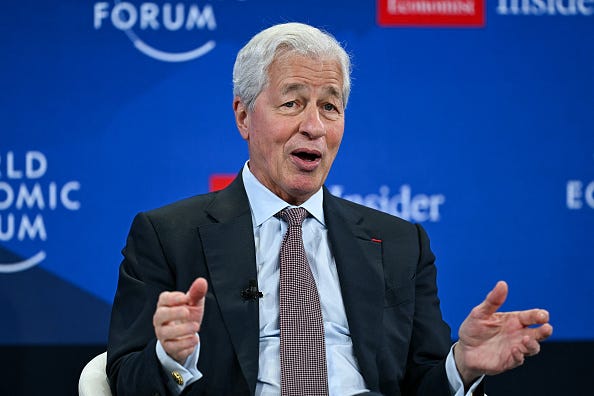
While Dimon’s words are hardly gospel in today’s Washington (as evidenced by the president’s ongoing lawsuit accusing JPMorgan of “debanking”), they foreshadow arguments the nation’s largest lenders will be making in the months ahead in key areas like capital, liquidity, deposit insurance, private credit and mortgages. Here’s a summary of some key points.
Capital: Banking trade groups have so far been positive, though circumspect, in their comments on the latest Basel proposal from the Fed, FDIC and OCC. Dimon was more blunt, saying his firm has a “mixed” assessment. “Everyone wants to move on,” he admitted, nodding to the years of back-and-forth over the standards. “But, unfortunately, the latest proposals are still very flawed in a few specific areas.”
The CEO first trained his fire on the piece of the plan that would force banks to protect themselves against losses from “operational risks” like a cyberattack. “Operational risk capital calculations are…intensely inaccurate and should actually measure risk,” he wrote. “The framework does not offer credit for anything that was done to dramatically reduce such risk.” He suggested the new proposal is better, but “hasn’t addressed all the duplication and flaws.”
Dimon’s fiercest ire was reserved for the Fed’s revisions to an extra capital requirement that applies only to the very largest global banks. “The GSIB surcharge is still broken,” Dimon wrote, complaining that JPMorgan would be required to hold far more capital than its peers.
“The calculation,” he said, “remains one of the most convoluted and distorted calculations I have ever…(Monday)
Click here to subscribe and read the full article.
What’s Missing? The banking agencies’ revised Basel plan clocks in at some 1,800 pages, but as lawyers pore over the details, some have been struck by what has been left out. Nowhere does the proposal explain how the Fed, FDIC and OCC are complying with a congressional directive that sets a minimum mandatory capital level for U.S. banks.
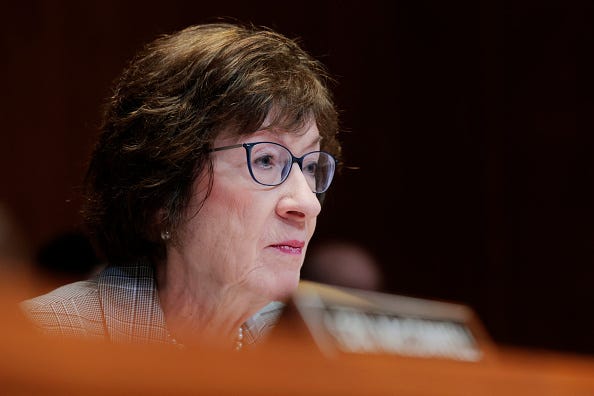
The omission is notable because the effort looks likely to result in the biggest cut in capital requirements since the passage of the Dodd-Frank Act. And the law included an amendment from Republican Sen. Susan Collins that essentially instructed regulators not to reduce capital below 2010 levels. It also sought to ensure that the biggest banks don’t end up with looser rules than their smaller peers.
By the agencies’ own description, the plan, approved last month, would reduce capital requirements for banks across the board. But some estimates buried deep in the release suggest – at least to some critics – that the new tack may not comply with Collins’ restrictions. At a minimum, they argue, the document should have addressed the issue head-on. “I would love to see their explanation as to how they think this is legal,” says Graham Steele, who served as assistant Treasury secretary for financial institutions during the Biden administration.
Representatives of the Fed, FDIC and OCC declined to comment. The agencies’ lawyers, sources say, are well aware of the Collins restriction and expect to be asked about it in comment letters, which are due in mid-June. Those questions could be answered in the final rule.
Still, the critique (coming mostly from the left) underscores a challenge that the Trump administration overseers are facing as they look to lighten regulations on the banking sector. Many of the changes would primarily help the largest U.S. banks, potentially putting regional or community lenders at a disadvantage. That’s particularly true when it comes to complex capital rules, which are easier for big firms and their teams of highly paid specialists to exploit.
It was exactly that concern that motivated Collins to take action. “It makes no sense that the capital and risk standards for our nation’s largest financial institutions are more lenient than those that apply to smaller depository banks, when the failure of larger institutions is much more likely to have a broad economic impact,” the senator said when touting her amendment in 2010. The provision was also backed by another high-profile Republican – then-FDIC Chair Sheila Bair.
The amendment states, somewhat opaquely, that any “generally applicable” capital rule shall “serve as a floor” for any other. The idea was to ensure that any constraint applying to smaller banks would also restrict the largest firms. The problem is that it’s not entirely clear…(Wednesday)
Click here to subscribe and read our full coverage.