
Talking Prediction Markets; Bank Merger Outlook Still Hazy; Financial Firms Flood Atkins With Policy Advice
Capitol Account: Free Weekly Version
Financial regulation news didn’t let up this week. Paul Atkins was treated to an Oval Office swearing-in ceremony, where Donald Trump stressed he would “end the weaponization” of the SEC and set “clear rules of the road” for digital assets. The new chairman concurred — and he even took a moment to praise the president’s decorating skills. Meanwhile, trade associations eager for Atkins to get to work have already flooded his mailbox with suggestions.
The stark future that awaits the CFPB came into clearer focus as administration officials laid out their blueprint for mass layoffs in court filings. The ongoing lawsuit, however, continues to keep the plans on pause for now. We also took an in-depth look at what the approval of the Capital One-Discover deal means for future bank mergers. And for our Friday interview, we sat down with the CEO of Kalshi, the upstart prediction market drawing regulatory scrutiny for offering bets on elections and sporting events.
Thanks for reading our digest of articles published this week. For much more coverage, click the button below to become a paid subscriber.
Friday Q and A: Not so long ago, few people in Washington had heard of prediction markets. Now they’re exploding, allowing Americans to bet on everything from elections and Fed rate cuts to tomorrow’s weather and the identity of the next pope. For policy makers, the rapid growth raises some pressing questions: When do the trades cross the line from investing to gambling? How should consumers be protected? And, perhaps most pressingly, whose job is it to figure out those answers?
This week we sat down with the leader of one of the companies at the center of the debate. Tarek Mansour is the co-founder and CEO of Kalshi, an upstart exchange overseen by the CFTC. In the past year, the company has listed futures contracts on the outcome of the presidential race and sporting events like the Super Bowl, generating significant regulatory scrutiny and opposition from powerful quarters such as the casino industry.
Mansour hasn’t been afraid to go to court to defend the products – and Kalshi keeps on winning. The CFTC, which has been struggling with the issue, is so flummoxed that it just canceled plans for holding a public roundtable on the topic. Meanwhile, Kalshi seems well-positioned for the upcoming fight: It has hired Donald Trump Jr. as a strategic advisor and counts CFTC chairman nominee Brian Quintenz as a former board member. Read on for Mansour’s ideas about how to regulate prediction markets, and why he thinks Washington has often misunderstood their usefulness.
What follows is our (lightly edited and condensed) conversation.

Capitol Account: Give us the quick story of your background.
Tarek Mansour: I was born in California. I grew up in Lebanon…From a very young age, I was very into mathematics. I have a little bit of an obsessive brain.
CA: What led you back to America?
TM: Around 13 or so, [I was] asking the question: Where are all the math geeks going? One of the answers I found is MIT. So I got pretty obsessed about getting into MIT for school – [trying] to optimize everything to get there. One fun fact: A lot of the English I actually speak, I learned through the SATs…I got into MIT, came to the U.S., and it was the same process. I got really into finance, because a lot of the math guys around me were going into finance. I went to Goldman, went to Citadel, I went to a few prop shops.
CA: When did you begin thinking about starting a prediction market?
TM: At Goldman, I was working on the equity exotics desk and it was in summer of 2016. All the demand that we were getting, all these questions that we were getting, were basically about the future: `Hey, I want to get exposure to Brexit or hedge against Brexit. I want to get exposure to Trump or hedge against Trump.’...I was young and naive and I started asking these questions like, why are we using indirect assets to get them to answer that question?
CA: How did these trades work?
TM: Imagine a bunch of complicated option structures. There was effectively a short on the S&P around the election. And people were right about their prediction, or the hedge that they wanted to put on, but they lost money because the S&P rallied in that period. It was this very bizarre thing.
CA: How so?
TM: We have a very natural question about the future, but we're using very unnatural instruments to mimic the exposure that people want to do, or the answer that people want to that question. I started getting really excited about the idea of, what if you could build a financial market where your underlying [asset] is not equity, it's not credit, it's not commodities, it's not FX – it's actually a question about the future.
CA: And you saw a big business opportunity?
TM: You might actually be building one of the largest, if not the largest, financial markets on the planet…It would also be one of the most useful…because you're actually pricing the future and you're pricing the odds. You're getting a forecast of probability that is market driven for any future event.
CA: What’s the need for a prediction market?
TM: You could potentially create a world [that provides] answers to the key questions that we have about our future – what is the risk of another Covid? What is the risk of the economy tanking? All these different, really important questions can now have answers that are more objective, less polarized, more numerical and more market driven. [That] enables us to make better decisions, have better resource allocation and better risk management over time. That felt like an extremely valuable thing to do.
CA: One issue that you quickly ran into, however, was regulation.
TM: We stumbled around the regulatory challenges. Because what we realized is that everyone who's attempted to do this before us did it…offshore, unregulated, oftentimes completely illegal.
CA: You wanted government oversight?
TM: Contrary to most Silicon Valley companies, our approach is very different. The core principle at the beginning, was: everything regulated first…We wanted a business that actually gets better and less risky and more useful and beneficial over time. So to us, [the thought was], how about we address the elephant in the room first, and we go through the front door and engage with the CFTC.
CA: From the outside, Kalshi’s relationship with the CFTC seems pretty rocky. What’s your assessment?
TM: A headline that says, `regulated registrant is engaging with their regulator’ is not very exciting. A headline that says regulated registrant sues their regulator is much more exciting. Tension and conflict are things that sell more, [draw] more eyeballs and are more exciting to hear about. But the reality – and I'd like to address these questions head on – is…we found the CFTC to be a regulator that's extremely constructive.
CA: Even so, Kalshi is locked in a high-profile lawsuit over the agency’s resistance to election contracts.
TM: Obviously on the election piece, we disagreed. It was just a fundamental disagreement on our read of the law and the social utility of these markets…We sued so that we could get an opinion from a court. And the court ended up siding with us…(Friday)
Click here to subscribe read the rest of the interview.
Thanks for reading. Follow us on X @CapitolAccount and on LinkedIn by clicking here. We’re always looking for stories, so if you have any suggestions on what we should cover (or comments about Capitol Account), shoot us a note. Rob can be reached at: rschmidt@capitolaccountdc.com and Ryan at rtracy@capitolaccountdc.com. If somebody forwarded this to you and you’d like to subscribe, click on the button below. Please email for information on our special rates for government employees, academics and groups: subscriptions@capitolaccountdc.com.
Reading Tea Leaves: Most took the blessing of the Capital One-Discover deal as a sign that the current crop of regulators isn’t going to stand in the way of bank mergers – even large ones. Inside the industry, however, there is still a fair amount of uncertainty about whether the Trump administration is truly keen on opening up the floodgates.
The policy outlook, notes one source, may be best described as “confusion.” The current M&A guidance from the FDIC, OCC and Fed, executives point out, seems to be more of a work-in-progress than set in stone. The antitrust division at the Justice Department, meanwhile, is a bit of a black box.
And perhaps most troubling to lenders, some power centers in the president’s orbit are strong skeptics of giant companies – as evidenced by decisions to continue pursuing monopoly prosecutions against the likes of Google, Apple, Amazon and Meta Platforms. Large banks haven’t been immune from populist fervor either. Case in point: the uproar over debanking.
All in all, that makes it tough to draw conclusions from a decision to back one major merger.
“There are a variety of different – at times conflicting – policy biases of this administration, which have got to, in an individual situation, be reconciled,” notes Gene Ludwig, the former Comptroller of the Currency who is now CEO of Ludwig Advisors. “And that’s not necessarily so easy.”
For his part, Ludwig says he sees “a pale green light” for banks. “There’s definitely going to be a tilt towards M&A activity,” he predicts. But he adds that some in the administration could be unsettled by factors like how prominent a firm has been in the diversity, equity and inclusion movement. “Depending on how much notoriety a transaction has, you could find a certain amount of volatility.”
Bank advocates say Trump’s nomination of Michelle Bowman to be the Fed’s vice chair for supervision is a good omen; she’s spoken publicly about the need to make merger reviews more transparent and consistent.
But the DOJ, which has a statutory role in reviewing bank deals, remains more of an unknown. New antitrust chief Gail Slater hasn’t explicitly backed off the more stringent Biden-era approach (at least not yet). Industry representatives also caution that a firm’s ability to merge can be closely tied with the views of front-line supervisors. Changing examination policies and culture is a longer-term project.
What follows is a breakdown of some key takeaways from the Capital One-Discover approval…(Thursday)
Click here to subscribe and read the full story.
You’ve Got Mail: It’s been a long four years for the investment advisers, brokerages, asset managers and public companies that the SEC oversees. Gary Gensler’s 50-plus rules agenda left little room for negotiations or compromise, let alone proactive recommendations. But now Atkins is on the job – and his mailbox is already overflowing with policy advice.
The highly detailed letters, released over the past weeks by many of the leading financial trade groups in Washington, call for shifts on issues big and small: proxy advisors, electronic delivery of investor documents, short-selling disclosures and share classes for mutual funds, to name a few.
Collectively, the documents amount to an enormous wish list for an industry that feels like it has been on the defensive for far too long. And the wishes may well come true, given that the commission’s leadership will be spearheading a big deregulatory U-turn in the months ahead. Firms’ eagerness for Atkins and his fellow commissioners to get moving is palpable.
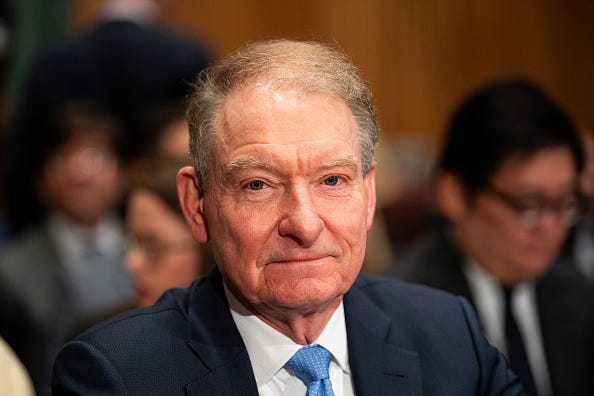
“Your distinguished record, years of experience in the industry, and history of service at the SEC will be instrumental to ensuring the strength, fairness and integrity of our financial markets,” Investment Company Institute President Eric Pan enthused in his note to the new chairman. “We look forward to working with you.”
While the suggestions vary from group to group (and some of the issues are pretty arcane), there was a lot of overlap on broad priorities like reforming corporate governance, boosting initial public offerings and allowing more retail traders to invest in private securities. All of those are areas where Atkins has advocated for updates in his public remarks and writings over the years.
Several of the letters also call for internal fixes at the SEC, such as mandating 90-day comment periods for proposed regulations, holding more public roundtables and overhauling the enforcement process. The proposed guardrails reflect executives’ experiences during the Biden administration, some pointed out. “The Gensler SEC used lawfare to intimidate and cajole American businesses, and that must never happen again,” wrote Chris Iacovella, president of the American Securities Association.
Here is a detailed look at some of the ideas awaiting Atkins…(Wednesday)