
Talking Fintech; Controversial SEC Rule Lingers; the Fight Over a Popular Treasury Lending Program
Capitol Account: Free Weekly Edition
It was a busy week on the financial regulation front. Getting right to work, newly installed FHFA Director Bill Pulte appointed himself chairman of the board at both Fannie Mae and Freddie Mac — a highly unusual move. He also axed top executives and directors at the companies. At the SEC, Chairman Mark Uyeda laid out his “blueprint” for rulemaking, telling investment firms that “the commission’s doors are open” and blasting the Gary Gensler era as “an aberration.”
Speaking of the former Democratic SEC chief, we took a look at one of his most controversial regulations that was overturned by a Texas federal judge last year. Surprisingly, it hasn’t fully died, and hedge funds are concerned. In another under-the-radar tale, the Treasury Department has been ordered to cut a popular lending program that serves rural and urban areas. The secretary, however, is fighting back. For our Friday interview, we talked fintech policy with the head of a trade association that represents online lenders, digital payment companies and other firms.
Thanks for reading our digest of articles published this week. To stay on top of the news, click the button below and subscribe to the daily newsletter.
Friday Q and A: Two months into the second Trump administration, the financial industry is worried about how the dust will settle. On the plus side, the government has rediscovered a laissez-faire philosophy toward innovation and is listening a lot more closely to the private sector’s ideas on how new products should be overseen. On the other hand, businesses crave regulatory certainty and the White House’s shoot-first-ask-questions-later approach hasn’t provided much, particularly at agencies like the CFPB.
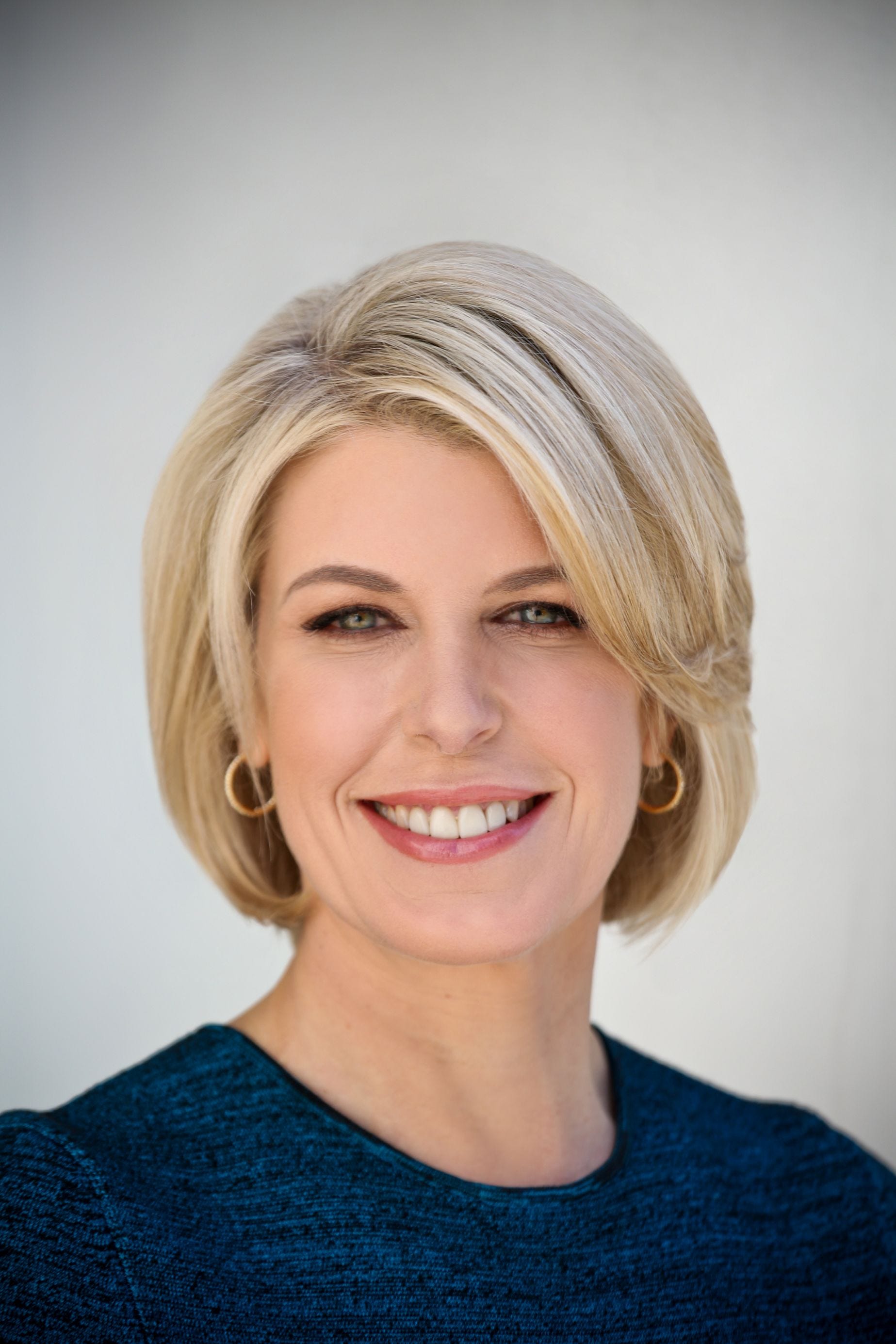
Financial technology firms are one group of companies grappling with this tension. Many have grown rapidly in recent years, expanding into services like lending and payments. That also means stepping up their dealings with numerous federal agencies. This week, we sat down with one of their chief voices in Washington, Penny Lee, to get her views on what’s ahead.
As president of the Financial Technology Association, Lee represents online lenders, popular payment apps, software infrastructure providers and other financial firms native to the digital world. Her members at times have seen themselves as victims of overregulation – and the group even sued the CFPB last year over a Buy Now, Pay Later policy. But they also have supported efforts like the bureau’s open banking rule, as a way to help them reach more customers.
Read on for Lee’s take on the CFPB chaos and her priorities for Trump 2.0. She also explains exactly it means to be a “fintech.” What follows is our (lightly edited and condensed) conversation.
Capitol Account: What led you to this job?
Penny Lee: The early half of my career was more in campaigns, working in more of the electoral politics side. And then [I was a] senior advisor to Majority Leader Harry Reid…In the private sector…I worked in multi-client servicing, mainly in the public affairs space….I did have a side hustle, and created an angel investment group called K Street Capital, investing in regulated markets…It's [now] at $65 million in assets under management.
CA: How did you land in the fintech world?
PL: The firm that I was at, Invariant, represented several fintech companies. From there, I was recruited to be the first hire for the Financial Technology Association. FTA was born out of…realizing there wasn't a collective voice for fintech companies. There were marketplace lenders, or there were payments [companies]…but not a collective group speaking for the entire industry.
CA: The association opened its doors in 2021. How do you define the membership?
PL: Digitally native financial services companies…We have payment companies, those that are in the lending space, Buy Now, Pay Later, Earned Wage Access, some that are in the capital markets, and also some in infrastructure. We specifically did not take on digital assets…that was already covered.
CA: Fintech can mean a lot of things.
PL: When I first took this role, it was interesting to hear who considered [themselves] fintech. And some of them were very large banks. They [would say], ‘We're a fintech company.’ I was like, ‘Hmm. Are you?’
CA: Why not allow some of the more traditional financial firms to join FTA?
PL: To make sure that…our voice wasn't diluted. But second, [so] there was that differential – so people could understand the policy perspective we were bringing to the table. It will be a little bit different than a bank, and it will be different than a card network.
CA: Do policy makers understand what fintech means?
PL: I was visiting a member of Congress [and they said], ‘I want to learn more about fintech. What is fintech?’ [I said,] ‘Well, have you ever left your Uber and not paid?’...People forget, back in the day, you couldn't just go online and make a payment. There had to be rails that had to be built to accept electronic payments…A lot of the infrastructure, I think, is – not taken for granted, but it just feels like it's just always been there. So we always have to remind folks.
CA: How are you approaching Washington now that Republicans are in charge?
PL: One of the challenges that we had in the past, in the Biden administration, was just this [view that] if there's a new product coming into the marketplace, a product that potentially is serving unbanked or underserved individuals and it's digital…chances are it's predatory…There was this automatic, ‘Let's think of how to use the rules to shut the product down.’
CA: That has changed?
PL: With the Trump administration and also members of Congress, [there] is a different view…What gap [is a company] trying to fill in the marketplace? How can we ensure that [we] have the right regulations in place for consumer protection and no fraud and no abuse…but also think about how [the company] can thrive? Because this is actually solving a real need.
Thanks for reading. Follow us on X @CapitolAccount and on LinkedIn by clicking here. We’re always looking for stories, so if you have any suggestions on what we should cover (or comments about Capitol Account), shoot us a note. Rob can be reached at: rschmidt@capitolaccountdc.com and Ryan at rtracy@capitolaccountdc.com. If somebody forwarded this to you and you’d like to subscribe, click on the button below. Please email for information on our special rates for government employees, academics and groups: subscriptions@capitolaccountdc.com.
Hanging Around: The SEC’s dealer rule was overturned by a federal judge last November – coincidentally the same day that its main proponent, Gary Gensler, announced his resignation. But although the regulation’s chief backer is gone, aspects of his controversial policy are still kicking, at least in some courts. Getting rid of something, it turns out, can be harder than it seems.
The rub is that the theory behind Gensler’s effort – that firms trading large volumes of securities should be labeled “dealers” and subjected to much stricter oversight – has been pushed for years by the agency in enforcement actions. In fact, several federal judges have ruled in the SEC’s favor, potentially enshrining the notion in legal precedent. That includes two decisions that have been upheld on appeal in the 11th Circuit.
Overall there are about a half dozen similar cases the enforcement division has brought since 2017, accusing investment firms that trade penny stocks of operating as unregistered dealers. The litigation hasn’t drawn much attention, except from a small group of hedge fund lawyers who have been watching the developments closely. Lately, however, alarm has been growing and the industry has escalated its pushback.
Last month, the Managed Funds Association and other groups filed an amicus brief in the Eighth Circuit to highlight what they see as the “far-reaching and detrimental effects on the proper functioning of the nation’s financial markets.”
In the case, a trial court agreed with the SEC’s contention that a firm called Carebourn Capital operated as a dealer when it flipped securities issued by microcap companies. While the brief didn’t weigh in on the underlying behavior, it stressed that the decision, if allowed to stand, “would make a felon of every institutional investor – every hedge fund, mutual fund, pension fund and private-investment office – in America.”
The filing also suggested that the SEC may be trying to do an end-run around the Texas federal judge who last year found the agency didn’t have the authority to adopt the dealer rule. “The commission is at it again – this time in litigation,” the brief pointed out. “Here, the commission sued a small defendant, without the means to defend itself, and pressed a theory that, if taken seriously, would – once again – seem to subject many of the world’s largest, most prominent market participants to a regulatory scheme Congress has not provided.”
(The brief was written by Eugene Scalia, the Gibson, Dunn & Crutcher partner and former Labor secretary who represented the trade associations in their successful challenge to the dealer rule.)
Outside of court, the industry has also been pressing the SEC to clarify its thinking on the issue. One step that it has requested is for the agency to issue some type of guidance memorializing a more limited definition of what constitutes a dealer.
That ask may well get a friendly reception. The two Republicans in the SEC’s majority, Acting Chairman Uyeda and Commissioner Hester Peirce, both voted against the dealer rule, partly because it was so expansive. They are also not likely to approve any more enforcement actions based on a similar theory…(Thursday)
Mobilizing: News of the March 14 executive order spread rapidly among small lenders and their Washington allies: The White House was moving to cut the Community Development Financial Institutions Fund, which steers government and private money to firms in distressed locales. Mac McNeil, who runs a CDFI owned by the National Community Reinvestment Coalition, had been sitting on his couch enjoying a Friday evening glass of scotch when he saw the directive. “OK,” he recalls thinking. “Here we go.”
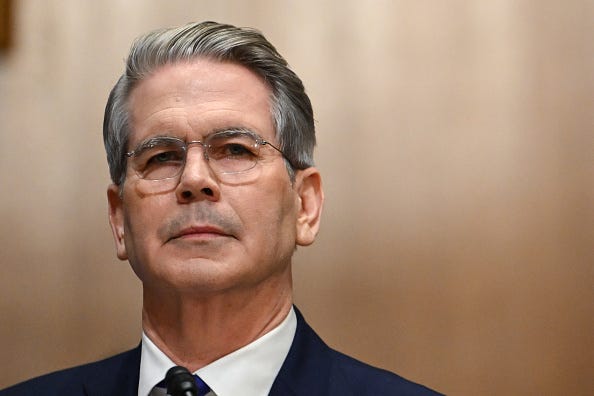
In the days since, McNeil and others who tap the popular and oft-overlooked program have started to mobilize grassroots support. Bank and credit union industry groups praised the fund in hastily drafted letters over the weekend. A bipartisan congressional caucus also quickly confirmed its support. And perhaps most notably for the CDFI cause, a powerful ally spoke up: Treasury Secretary Scott Bessent.
The secretary’s office wasn’t informed of the executive order prior to its signing, sources say – even though the fund is part of his department. Bessent put out a statement earlier this week that seemed at odds with the tone of the executive order, and he has told members of Congress he supports the program.
“This administration recognizes the important role that the CDFI Fund and CDFIs play in expanding access to capital and providing technical assistance to communities across the United States,” Bessent said. “CDFIs are a key component of President Trump’s commitment to supporting Main Street America in the pursuit of job growth, wealth creation and prosperity.”
The White House directive requires that the Treasury report to OMB Director Russell Vought by the end of this week to justify the legality of the CDFI fund’s various programs. Bessent will comply, his statement said, adding that the secretary “looks forward to future engagement with CDFIs and other stakeholders to strengthen the impact of these statutory programs and incentivize economic opportunities for all Americans.”
The intra-administration tiff is one of many simmering conflicts resulting from the budget chief’s moves to project his will (or, according to Vought, the president’s will) across the government. And though the OMB director is a powerful foe, the CDFI industry, which now includes about 1,400 banks, credit unions and other firms with a total of $436 billion in assets, is feeling confident that the fund will survive.
“People and communities regardless of party, regardless of ideology, love CDFIs,” says Mark Pinsky, president of CDFI Friendly America, a consultancy that helps stand up the institutions. “This has really fired people up. I’m shocked at how many people I’m hearing from who want to get together and I think there’s going to be a bigger effort than ever in this field – and we’re pretty good at organizing.”
What follows is a rundown of the brewing battle…(Wednesday)

Recommendation: Like Capitol Account? Check out Open Banker. Open Banker curates and shares policy perspectives in the evolving landscape of financial services for free. It has quickly become essential reading for anyone interested in thoughtful arguments on where financial regulation should go. Click here to see recent articles and to subscribe.