
Talking Banks and Fintechs; Atkins Cracks Open Pandora's Box; Lobbyist's Joke Leads to Firing; Khan Returns to the Arena
Capitol Account: Free Weekly Edition
Sponsored by Georgetown Psaros Center for Financial Markets and Policy
A busy SEC dominated financial regulation news this week, as the new chairman’s deregulatory agenda kicked into high gear. The agency approved a plan from Exxon Mobil to let retail shareholders side with management on proxy votes, stirring angst among activist investors. Republican commissioners voted to issue a policy statement that could curtail securities class actions, and changes to equity market structure were debated at a public roundtable. As if that weren’t enough, the president called on the commission to reduce how often public companies report earnings.
In other developments, Democrats on a Senate investigative panel blasted KPMG’s audits of three failed banks — and raised questions about oversight of the accounting industry. The OCC reorganized its bank examination teams for the second time in a year. And we learned that a prominent trade group fired one of its longstanding lobbying firms over a joke. For our Friday interview, we spoke with a trade group executive about the dynamic between banks and fintech firms.
Thanks for reading our digest of articles published this week. Click the button below to become a paid subscriber and get our full coverage.

Friday Q and A: Banks and financial technology companies have been squaring off in some high-profile policy battles lately, on everything from financial data-sharing to stablecoins. But underneath the bare-knuckled lobbying and charged rhetoric, the reality is more nuanced. Even as they compete in some areas, the two industries team up in others. In fact, they often need each other.
This week we sat down with a trade group executive whose job puts her on both sides of the debate. Her take: don’t believe the hype. Things are a lot more copacetic than they seem. As senior vice president for innovation and strategy at the American Bankers Association, Brooke Ybarra regularly fields phone calls from fintech firms looking to work with her members rather than fight them. She also travels the country talking to community bankers about digital assets, artificial intelligence and other technological developments – subjects they’re eager to learn about.
Read on to get Ybarra’s thoughts on the threats and opportunities that innovation presents to lenders – and what regulators should be doing about it. What follows is our (lightly edited and condensed) conversation.
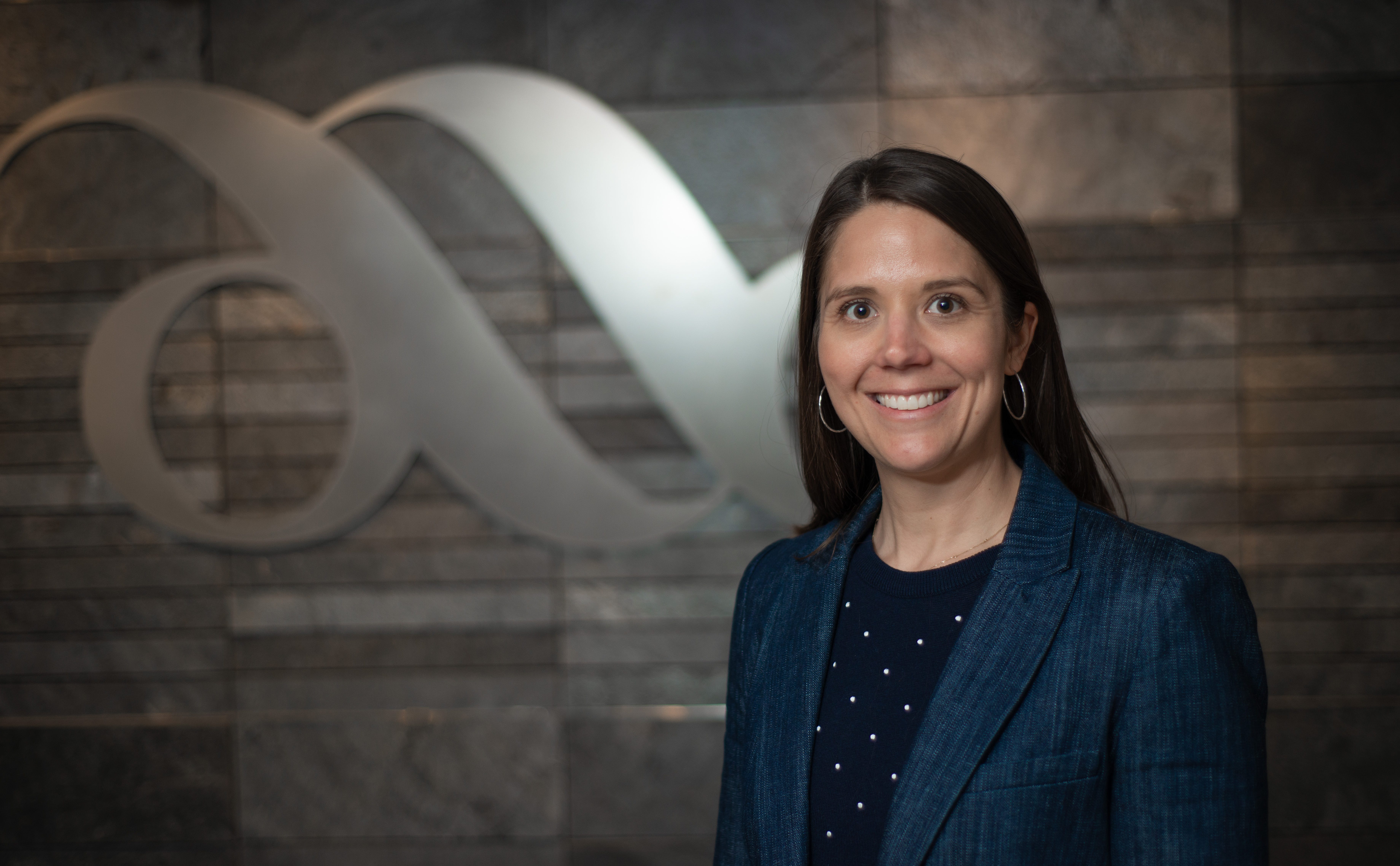
Capitol Account: Tell us about your background.
Brooke Ybarra: I started my career at the Central Intelligence Agency, and was there for about four years. It is a very interesting place – always a good conversation starter.
CA: Definitely. Are you allowed to talk about it?
BY: If I told you, I’d have to kill you. In all seriousness, I was on the analytic side of things there, not in the field. My undergrad degree is in chemical engineering, so I covered chem warfare issues for Russia and the former Soviet states. I was there from 2004 to ‘08. There was a big focus on counter-terrorism at that time.
CA: Banking policy seems much more mundane. What led you to switch careers?
BY: I made the decision to go to business school, and coming out of Georgetown, went into consulting, specifically in the payment space. It was…a fascinating time. Square was IPOing. We were converting to chip and pin, [and] starting to think about paying for things with our phones.
CA: A big part of your focus at ABA is `innovation.’ That’s a word that is thrown around a lot these days in Washington. What does that mean in banking?
BY: Innovation, even just among our membership – which ranges from smaller single-branch community banks all the way up through the largest banks – means something very different to each of them. What they’re thinking about, what they might be implementing or technology they’re considering can really span the gamut. So we take a broad view.
CA: Your role also involves `strategy.’ That seems like a pretty wide-ranging area as well.
BY: The strategy part is working with our bank members to help think through how the market is changing. What new technologies are on the horizon, and how should you think about implementing them? What new competitors might you be facing? How is Starbucks or Netflix changing customer expectations for service delivery, and what does that mean for the bank market?
CA: We hear you have a busy travel schedule.
BY: That is the fun part – getting out and being in a small room, meeting with bankers face to face, hearing directly the challenges that they’re facing and how they’re tackling these issues.
CA: How does that mesh with your work in Washington dealing with lawmakers and regulators?
BY: The two go really hand in hand…The way banks are approaching the business side of those issues is just as important as, and helps inform, what we need to be advocating for.
CA: Stablecoin oversight is a top priority for banks right now. What’s ABA been doing on the issue?
BY: We’ve been heavily engaged with both Congress and the regulators in thinking through what is the appropriate regulatory framework that should apply to payment stablecoins. And how we ensure the right guardrails and a robust supervision structure to ensure financial stability and consumer protections. A level playing field, the principle you’ve no doubt heard from us many times – same activity, same risk, same regulation. That’s at the core of it.
CA: Are banks also interested in getting into the stablecoin business?
BY: There’s a lot of research and exploration going on right now at banks of all sizes…We’re all trying to figure out what the benefits are in a market like the United States that already has a lot of digital access to money…and fairly advanced payment systems. A lot of the rationale for payment stablecoins is around dollarizing the global economy and having access to dollar-denominated assets when you’re abroad. Those aren’t as relevant for the U.S. domestic market.
CA: So their appeal remains to be seen?
BY: People are rightly asking the question, do we really need this? But I’ll say, banks are…open to the idea that maybe the answer is going to be yes. Maybe we are going to see movement onto blockchain of a lot of payments and different financial services. Absolutely banks are preparing to engage in this space if that’s the world that we live in tomorrow.
CA: How worried are your members about stablecoin issuers encroaching on their business?
BY: We’re hearing from a lot of banks right now, and one of the first questions we ask is: threat or opportunity? And I would say, we hear `threat’ more… It comes down to: Is payment stablecoin intended to be a store of value or a means of payment? That store of value piece, that is a threat. We are really concerned about deposit outflow and the downstream impacts that has on cost of funds and banks’ ability to lend back into their communities…(Friday)
Click here to subscribe and read the rest of the interview.
Thanks for reading. Follow us on X @CapitolAccount and on LinkedIn by clicking here. We’re always looking for stories, so if you have any suggestions on what we should cover (or comments about Capitol Account), shoot us a note. Rob can be reached at: rschmidt@capitolaccountdc.com and Ryan at rtracy@capitolaccountdc.com. If somebody forwarded this to you and you’d like to subscribe, click on the button below. Please email for information on our special rates for government employees, academics and groups: subscriptions@capitolaccountdc.com.
Pandora’s Box: Thursday’s roundtable on the SEC’s trade-through rule didn’t draw a big crowd to the agency’s Washington headquarters, which might be expected considering it’s a pretty dense topic. But that didn’t stop some 30 panelists – representing brokers, market makers, academics, exchanges, asset managers and investor advocates – from offering widely divergent views on whether the 20-year-old regulation needs to be updated, or even scrapped.
Still, most agreed on one point: making even minor tweaks to the requirement, which seeks to ensure investors get the best price for their trades, will reverberate across the entire U.S. market structure. That, a number of speakers warned, merits careful consideration to prevent what could be major unforeseen effects.
Katie Kolchin of the Securities Industry and Financial Markets Association may have put it best (or at least the most understandably) when she likened the situation to an octopus with its “many tentacles [that] can move in multiple directions.” The trade-through mandate “represents the head of this octopus,” she added. “If you move or change one piece, other parts can move as well.”
Joe Mecane of Citadel Securities drove the point home succinctly as well, offering up a list of 10 different regulations that would be impacted. “We worry that removing the trade-through rule would be very complex, potentially disruptive, especially to retail investors, and the unintended consequences would not warrant the risk,” he said.
BlackRock’s Hubert De Jesus emphasized that “U.S. equity markets function exceedingly well today…and are fairly widely admired around the globe.” He too struck a cautious note. “We think the trade-through prohibition is very closely connected to a number of other provisions,” he said, comparing changing the regulation to “taking a keystone off an arch.”
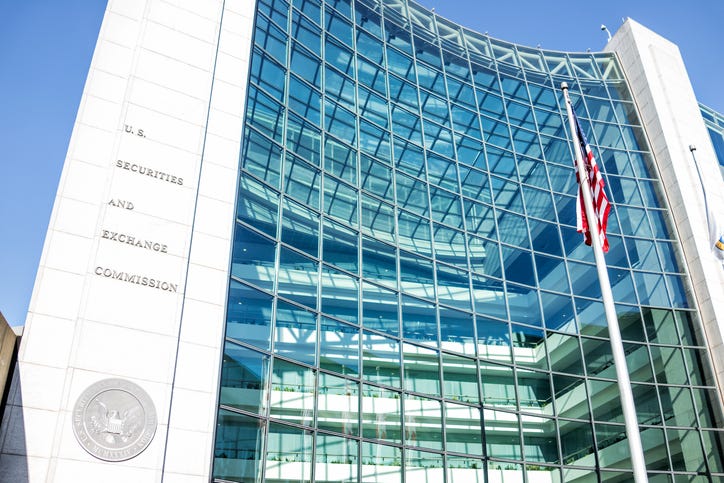
All in all, it was a pretty stark reminder to Paul Atkins that he could be opening Pandora’s box. And he doesn’t have to look too far back in SEC history for a good example. Market structure reform was a top priority of his predecessor Gary Gensler, and it didn’t go as the Democratic chair hoped. The effort kicked up a storm of opposition from all corners of Wall Street, all but ensuring that his two furthest-reaching proposals were unfinished when he left the agency. Though Gensler did manage to adopt two rules, one is being challenged in court.
Atkins, however, seems unbowed. In his brief remarks at the event, the chairman left little doubt that he is eager to wade into the issue and is open to a comprehensive revamp a la Gensler. His plan, of course, would look a lot different…(Thursday)
Click here to subscribe and read the full article.

Lobby Talk: Larry Fink has always elicited strong feelings from Republicans in Washington. But when one GOP lobbyist brought up the BlackRock CEO at a fundraiser this summer, it cost his firm a longtime lobbying client – the main trade group for the mutual fund industry.
By most accounts, the comments by Sam Geduldig, managing partner at CGCN Group, were seen as a joke – albeit a pointed one. Speaking to House Financial Services Committee member Andy Barr in front of the gathered crowd, Geduldig suggested that Republicans take a cue from Democrats and “weaponize” the agency. Why not, he asked, use it to go after executives like Fink who advocated for ESG policies that put progressive climate goals ahead of “fiduciary responsibilities” to shareholders?
The remarks, the sources say, drew a few chuckles and a non-answer from Barr. But that was far from the end of it. Among those attending the luncheon at La Collina restaurant – and apparently not amused – was a BlackRock lobbyist. Word quickly got back to the Investment Company Institute, the mutual fund trade association that has used the all-Republican CGCN as an outside consultant since the early 2000s. ICI had been retaining the firm for $8,500 a month, records show, a low rate that sources say reflected the lengthy relationship. (Disclosure: Capitol Account subleases an office from the lobbying shop.)
Within a day or two, sources say, Geduldig got a call from Erica Elliott Richardson, the chief of staff to ICI President Eric Pan who was also serving as the acting head of government affairs. When Richardson asked if he had disparaged one of the group’s biggest members, Geduldig underscored that he was speaking for himself and presenting his personal views at a fundraiser he hosted.
Shortly thereafter, CGCN was fired by Don Auerbach, ICI’s chief operating officer who in an email pointed out that its contract prohibited the firm from disclosing confidential information or making statements to the media….(Monday)
Click here to subscribe and read the full article.
‘Different Moment’: Antitrust advocates, gathered this week for the annual “Anti-Monopoly Summit,” couldn’t help but notice how times have changed. For one thing, the crowd was a bit thinner. The keynote speakers – Lina Khan and Rohit Chopra – now have the word “former” in front of their titles. And the group hosting the conference, the American Economic Liberties Project, dispensed with its tradition of opening the event with a “hype reel” of progressive accomplishments.
“For the last two years the Anti-Monopoly Summit has largely been a celebratory affair,” observed Nidhi Hegde, AELP's executive director. “We’re in a different moment now.” Indeed, some of the biggest policy victories won by Khan and Chopra, such as the FTC’s rule banning non-compete clauses, have been shredded with surprising speed over the past year by GOP appointees or conservative judges – or both.
Still, there was no sign of diminished enthusiasm. If anything, the setbacks since Donald Trump took office seemed to have deepened attendees’ belief in the righteousness of their fight. The roster of speakers included several members of Congress’ new “Monopoly Busters Caucus,” perhaps reflecting the organizers’ desire to pivot toward enacting permanent laws rather than changeable regulations.
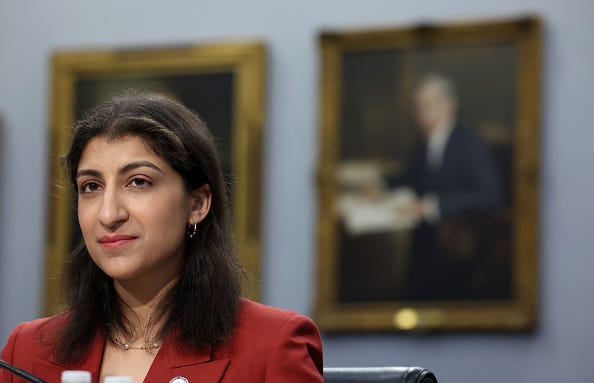
The crowd was particularly fired up to see Khan, who hasn’t said much publicly since decamping from D.C. to Columbia Law School. The former FTC chair drew a standing ovation after being introduced as "the leader of our movement” by Hegde, who observed with glee that Khan remains a thorn in the side of big business. “Eight months after leaving office, Jim Cramer and The Wall Street Journal editorial board are still obsessed with her,” Hegde grinned. “That should tell you something."
In her speech, Khan took the long view, casting the assembled lawyers, policy geeks, union representatives and consumer advocates as part of a lengthy crusade. “At its core, anti-monopoly is a governing philosophy. It views concentration of power as a threat to freedom,” she said.
Lamenting the “enormous grift” of the current administration, Khan painted a dark picture of an America in which average people struggle with bills and housing costs while “the wealthiest men on the planet dine with the president in a gilded ballroom,” currying favor and receiving handouts…(Monday)
Click here to subscribe and read the rest of the article.
