
Talking Alternative Assets in Retirement Plans; SEC Corporate Governance Reforms Spark Resistance; CFPB Grapples With Open Banking
Capitol Account: Free Weekly Edition
The government shutdown entered its fourth week, but regulators were (thankfully) still pretty busy. The Fed, which isn’t impacted, held a conference on payments where much of the attention was focused on a top official’s surprising proposal to give fintech firms direct access to the central bank. The heads of the CFTC and SEC, whose agencies are largely shuttered, stopped by a securities industry event to tout their agendas. Comptroller Jonathan Gould, also making the rounds, got a warm welcome at a banking trade group’s annual conference.
On the policy front, we wrote about Paul Atkins’ plans to overhaul corporate governance rules. It’s an arcane area that has drawn little attention, but opposition is building. Meanwhile, the CFPB received thousands of comments on its decision to reconsider a Biden administration regulation on financial data sharing. No surprise, the crypto industry is in the middle of the heated fight. For our Friday interview, we spoke with two fiduciary advocates who are worried about the push to include private equity and other alternative assets in 401(k) plans.
Thanks for reading our digest of articles published this week. Click the button below to become a paid subscriber and get our full coverage.
Friday Q and A: Wall Street’s long campaign to open 401(k) plans to private equity and other alternative investments has never been closer to victory. Spurred on by a White House executive order this summer and exhortations from Republican lawmakers, the Department of Labor and SEC have pledged to move swiftly on new policies that could fundamentally reshape how Americans save for retirement. An aggressive industry lobbying campaign has helped fuel a sense of inevitability.
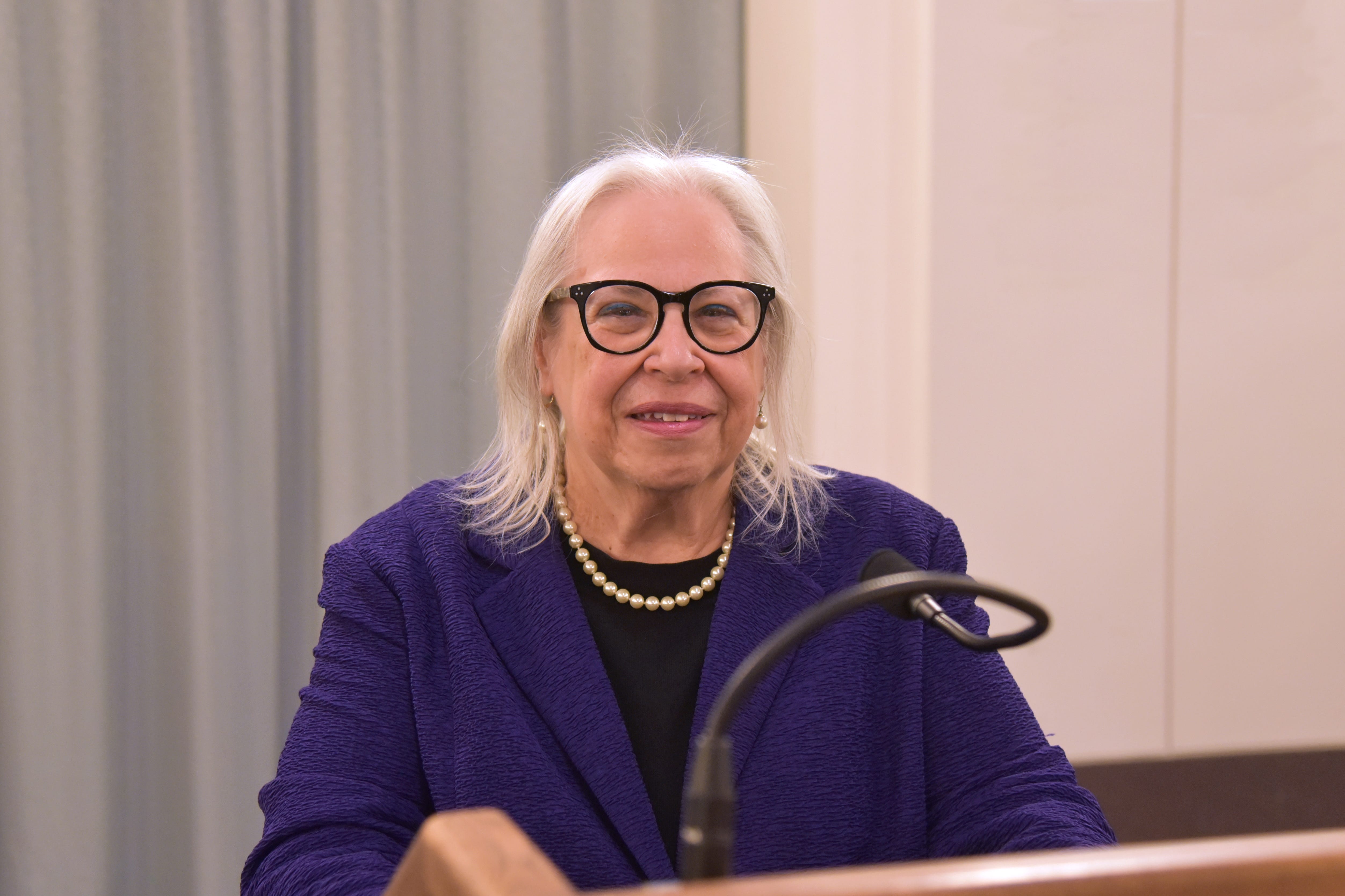
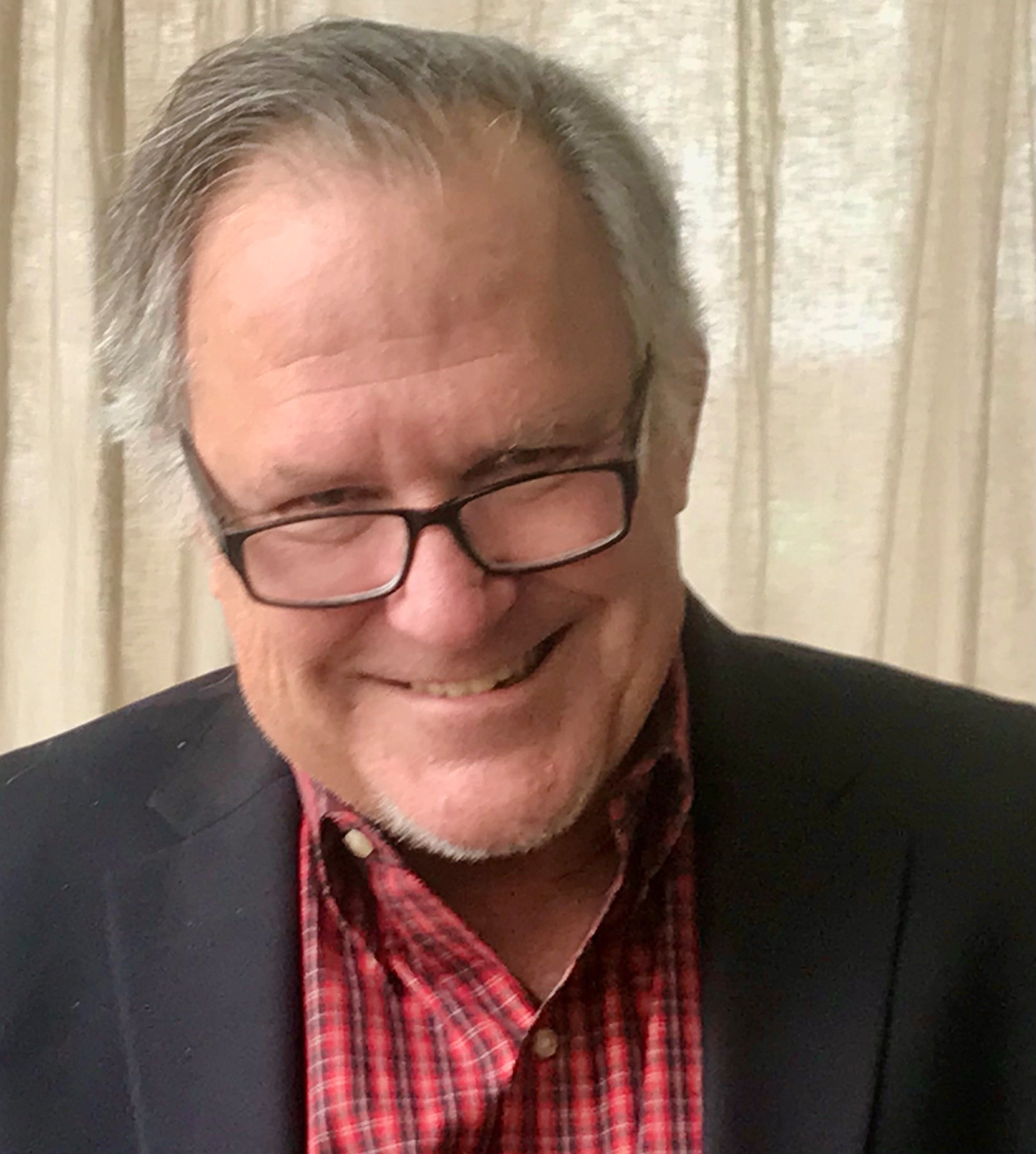
Not everyone, however, is applauding the situation – or accepting it as a fait accompli. This week, we sat down with two advocates who are making it their mission to provide the alternative view on alternatives. Phyllis Borzi was the assistant secretary of Labor for employee benefits security during the Obama administration, when she was instrumental in finalizing the star-crossed conflict of interest rule for retirement advice. And Knut Rostad is the president of the Institute for the Fiduciary Standard, which supports the principle that financial professionals put their clients’ best interests first. (Borzi sits on the group’s board.)
The pair sees the Trump administration’s effort as a “radical” shift that could put “sacred” money at risk. And though they acknowledge that opposition thus far has been somewhat subdued, they’re busy recruiting more critics to speak out – and potentially mount a court challenge down the road. What follows is our (lightly edited and condensed) conversation.
Capitol Account: Tell us about your organization.
Knut Rostad: The institute was formed in 2011, with the singular mission to advocate for, and educate about, what fiduciary is and why it matters…That’s what we do all the time, and we do it [with] programs, webinars, papers, op-eds – to get our point across.
CA: Fiduciary duty can be a nebulous concept. What’s the easiest way to explain it?
KR: It is a set of principles that require strict loyalty to your client, and strict care to your client.
Phyllis Borzi: It sets the code of conduct, if you will, for people in dealing with other people’s property, money, etc.
CA: How does the fiduciary standard tie into the debate over alternative assets in 401(k) plans?
KR: In a sense, it has everything to do with it. As a clean starting point, go back to the executive order in August and look at what it does…In those very few words, I counted them and I think there are just barely over 700, it basically orders the Department of Labor to come up with new guidance to make it easier for a plan sponsor to add alternative investments. [It also] is looking for guidance to make it more difficult to litigate, should a plan participant believe they were not treated by a fiduciary.
CA: Phyllis, you were the person at DOL in charge of dealing with these types of issues. How does the law, known as ERISA, lay out a fiduciary’s responsibilities?
PB: It’s a functional test. The two most important duties under ERISA for a fiduciary are the duty of prudence and the duty of loyalty…For 51 years – ERISA celebrated its 50th anniversary last year – the Department of Labor has faithfully mirrored the statutory framework for fiduciaries to use.
CA: Does it give any direction about different types of assets?
PB: There aren’t any per se good investments or bad investments. It’s the job of the fiduciary…to evaluate the investments that are available to the plan in the marketplace. [Then] applying primarily, if not exclusively, financial criteria, decide what’s solely in the interest of participants.
CA: How would the president’s executive order change that?
PB: The Department of Labor has never, ever, in its 51 years of administering this statute singled out any particular investment type or asset class for special treatment. They’re all treated at the first instance the same…So, this is radical. The administration is not just putting a finger, a thumb, but an entire body on the scale – and basically directing the Department of Labor to say these things are O.K.…As someone who spent my career focusing on protecting the retirement security of individuals, it is very troublesome.
CA: Isn’t it true that the law doesn’t prohibit alternative assets from being included in a 401(k)?
PB: There is nothing in ERISA nor under the fiduciary duties that exist today that make it impossible for a fiduciary exercising that prudent and loyal approach [to] invest in these things.
CA: What has been holding them back?
KR: Relative to traditional investments, alternatives are more costly. They are illiquid. They are opaque. They are complex, and thus are more risky.
PB: Knut perfectly captured what a fiduciary would be concerned about in making that investment decision…The barrier that keeps fiduciaries from warmly embracing these assets today is the fact that there’s no transparency. People can’t figure out anything about these things.
CA: The industry says that the problem here is litigation risk – that retirement plans are too worried about getting sued if they include private market investments. Financial firms want DOL to shield them from lawsuits.
PB: And that proves the point that they’re so risky…If they really want to reduce litigation risk and encourage more investment in these types of things, then they need a full and robust disclosure regime…They need to reduce the risk of their product…(Friday)
Click here to subscribe and get the complete interview.
Thanks for reading. Follow us on X @CapitolAccount and on LinkedIn by clicking here. We’re always looking for stories, so if you have any suggestions on what we should cover (or comments about Capitol Account), shoot us a note. Rob can be reached at: rschmidt@capitolaccountdc.com and Ryan at rtracy@capitolaccountdc.com. If somebody forwarded this to you and you’d like to subscribe, click on the button below. Please email for information on our special rates for government employees, academics and groups: subscriptions@capitolaccountdc.com.
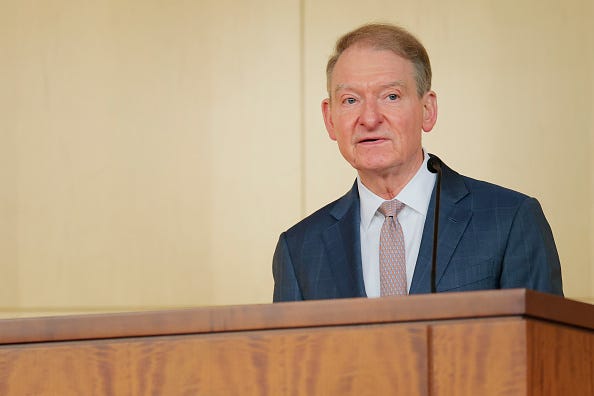
Rising Resistance: In recent weeks, SEC Chairman Paul Atkins has pushed a series of policy shifts on esoteric corporate governance issues. The initiatives – on proxy voting, shareholder proposals and mandatory arbitration – have yet to draw much public outcry. But a nascent opposition movement is forming, determined to focus attention on what critics say is shaping up to be a radical overhaul that could fundamentally tilt the balance of power between companies and their investors.
Several well-known advocacy groups have begun sounding the alarm. On Monday the International Corporate Governance Network, which represents large pension funds and asset managers, sent a letter to Atkins and his fellow commissioners warning that the effort could “substantially alter” current regulatory practices. It also called out the agency for avoiding a broader debate on the changes.
“We feel that the absence of public consultations on important announcements, which may negatively affect shareholder rights, risks lowering the quality of the highly regarded due process and governance standards in the United States, thereby presenting a risk to the attractiveness of U.S. capital markets,” ICGN Chief Executive Officer Jen Sisson wrote.
Another organization representing big pension funds, the Council of Institutional Investors, added a new page to its website on “safeguarding investors’ rights” and is planning forums to educate members on the developments.
“There is a concerted effort by this SEC to essentially eliminate the ability of shareholders to hold corporations accountable,” says Corey Frayer, director of investor protection at the Consumer Federation of America. “The direction Chairman Atkins is moving is quite out of line with the mainstream, and you’re starting to hear people come out and say that.”
He adds that the resistance is just getting started: “I don’t think I’ve had enough time to estimate how big this coalition will grow, but out of the gate it is clear there is broad concern among a lot of actors.”
Opponents are also starting to fight back in the courts. Last week, the City of Hollywood Police Officers’ Retirement System sued Exxon Mobil and its board in a New Jersey federal court over a new program that would let the company’s retail shareholders cast proxy votes in line with management. The SEC signed off on the plan last month via a no-action letter, a staff determination made behind closed doors.
Atkins, for his part, has long championed corporate governance reforms – and made clear that it’s one of his top priorities outside of digital assets. His view, laid out in speeches and papers he’s written over the past two decades, is that the process has often been “weaponized” by activist shareholders looking to promote pet causes. Management, he argues, should be focused on long-term profitability but is often held hostage by a vocal minority of agitators.
As chairman, Atkins has cast his governance efforts as promoting IPOs and making it “cool” to be a public company again. To that end, he has called for revamping the agency’s system for signing off on shareholder proposals. The matter will be addressed via rulemaking, he noted at an event this month in Delaware.
The speech was more notable, though, for something else the SEC chief said about one of activist shareholders’ most commonly used tools. Non-binding resolutions, he posited, might be contrary to the state’s law. He even encouraged companies to test the theory in court. Largely left unsaid: If the resolutions were deemed illegal, the commission would be able to give firms a green light to exclude the vast majority of proposals they receive – no regulatory change needed. (More than two-thirds of S&P 500 companies are headquartered in Delaware, the chairman underscored.)
The idea took shareholder advocates – and many companies – by surprise…(Thursday)
Click here to subscribe and read the full article.
Outpouring: Russell Vought is once again musing about shuttering the CFPB, telling a podcaster last week that the administration’s “closedown” effort would be “successful, probably with[in] the next two, three months.” But the roiling fight over its open banking rule shows that it may not be so easy to carry out the acting director’s plans. In fact, the regulation is turning out to be the one policy adopted under Democrats that the bureau can’t dismissively scrap.
In recent weeks, nearly 14,000 letters have flooded into the agency in response to its decision to reconsider the financial data sharing requirements adopted at the end of the Biden administration. And notably for Vought and others in the White House, many of the missives came from the president’s crypto industry backers who are demanding the dictates remain on the books.
“The open banking rule protects every individual’s right to own, access and control their banking and financial data,” wrote Cameron and Tyler Winklevoss, emphasizing that it is crucial to the business of Gemini, their digital assets exchange.
The executives’ plea was echoed in thousands of other comments on the CFPB’s advance notice of proposed rulemaking, including from leading crypto trade associations and individuals. “For millions of Americans, crypto isn’t just an investment, it’s a way to participate in a new and innovative financial system,” noted one letter that appeared repeatedly. “Open banking makes this possible.”

Many of the submissions had a distinct anti-bank message. A popular target was JPMorgan Chase, which earlier this year said it would start charging fintech companies to access customer account data – something that would be banned under the Biden-era rule. “I am writing because I am alarmed by news reports that JPMorgan Chase has successfully used its dominant position to extract exorbitant fees from technology providers,” another of the form letters began. “This is exactly why we need strong open banking protections.”
While it’s not clear where the campaign to bolster the rule originated, the overlap with the rhetoric of the Winklevoss twins and other crypto supporters is hard to miss. The letter mentioning JPMorgan was promoted on the website of a group called Americans for Financial Freedom, which also re-shared a Monday X post from Tyler Winklevoss asking his followers to write to the CFPB.
A separate conservative advocacy group, Save Our States, is running a “Banks vs. America” campaign warning of “tolls” on data that could affect “cryptocurrencies” as well as “budget apps.” It recently sent a billboard truck featuring a cartoon of a greedy banker with a bag of gold coins to drive through downtown Washington.
“In terms of financial regulatory issues, this is our first foray,” says Trent England, the group’s executive director, in an interview. “We wanted to make it really clear that from our perspective this is a fight between American consumers and the big banks.” The organization doesn’t disclose its funders, though England says he isn’t working with the Winklevoss brothers. He adds that he doesn’t recall precisely how the open banking issue got on his radar. “Probably just conversations with people in D.C.,” he posits.
The sheer volume of comments poses a challenge to the short-staffed CFPB. Vought, in his appearance on “The Charlie Kirk Show” last week, noted that “we don’t have anyone working there except our Republican appointees and a few careers that are doing statutory responsibilities while we close down the agency.” That bare-bones crew will presumably have to read all the feedback and sort through a number of thorny issues it raises.
Banks, for their part, are pushing hard for the CFPB to significantly pare back the regulation…(Wednesday)
Click here to subscribe and read the full story.