
Tackling Insider Trading on Prediction Markets; Financial Firms Want an Active CFPB; SEC Proposes to Nix Quarterly Reporting Mandate
Capitol Account: Free Weekly Edition
Sponsored by U.S. Bank. Small enough to care, big enough to make a difference.
Banks said no thanks to what was billed as a bipartisan compromise on stablecoin interest payments, a key issue that could help determine the fate of the Senate’s crypto market structure bill. Meanwhile, the FSOC and Fed seemed largely unworried that the turmoil roiling private credit funds could trigger systemic risks. And the CFTC now needs to read more than 3,500 comment letters with suggestions on how to oversee prediction markets. The feedback, from giant futures exchanges, sports leagues, casinos and the unhappy mother of a Kalshi customer, is a strong indication that setting rules for the popular trading platforms won’t be easy.
As always, it was a busy week in financial regulation. See below for excerpts of stories on the reaction to the CFPB’s latest strategic plan, and the SEC’s proposal to make quarterly reporting optional, an idea put in motion by a Donald Trump tweet. For our Friday interview, we sat down with a noted market manipulation expert to discuss policing insider trading in — you guessed it — prediction markets.
Thanks for reading our free digest of articles published this week. Click the button below to become a paid subscriber and get our full coverage.

Friday Q and A: Headlines about soldiers betting on classified missions and politicians putting money on their own races have fueled a perception that prediction markets are a hotbed of insider trading. Fair or not, it’s become a major issue as regulators and lawmakers grapple with how to regulate the exchanges, which draw an enormous retail crowd. The CFTC, which has aggressively asserted its authority over event contracts, has found itself in an unusually bright spotlight as it weighs a new oversight regime.
We sat down this week with University of Pennsylvania Professor Daniel Taylor who has some ideas for the agency – informed by years of research on fraud. A forensic accountant, Taylor consults for the Justice Department and advised members of Congress on a recent law aimed at deterring insider trading by foreign executives. He’s also working for Kalshi, helping one of the leading prediction markets bolster its surveillance operation.
In a comment letter to the CFTC last week, Taylor emphasized that the agency has the power it needs to police prediction markets, but he urged the regulator to strengthen know-your-customer requirements and build greater transparency into the system. That could go a long way to easing public concern about front-running and manipulation, he argued. Read on to learn more about Taylor’s policy prescriptions, as well as his take on why the upstart platforms have a bright future. What follows is our (lightly edited and condensed) conversation.

Capitol Account: What’s your background?
Daniel Taylor: I started at Penn in 2010 in the accounting department…I hold the Arthur Andersen endowed chair at Wharton. I teach classes on data analysis and forensic analytics.
CA: Do your students know about Arthur Andersen and how it collapsed due to the Enron fraud?
DT: No, but my clients do. It’s kind of ironic because I’m the inverse of the Arthur Andersen accounting firm.
CA: You also consult. What kinds of firms are you working for?
DT: Kalshi is one of my clients. I have a Big Four auditor as a client. I have the Department of Justice fraud section as a client. Basically, if you are interested in detecting and deterring fraud, I’m the guy. Now, I’m not a lawyer, so this is what’s sort of unique about me.
CA: How so?
DT: I’m in the data science and economics space…I found that a lot of lawyers went to law school to avoid math and economics and data. It’s good for me because it helps my consulting practice.
CA: Tell us about your involvement in public policy issues.
DT: I run something called the Wharton Forensic Analytics Lab, [which does research] around white collar crime, insider trading, accounting fraud, market manipulation. I weigh in when either the CFTC puts out a call for comment or the SEC puts out a call for comment, and [also] work with congressional leaders…One of the things that I have found is that what we often take for granted in academic circles, people in practice don’t even know about. Once you educate them, then they agree that it’s a problem and needs to be taken care of.
CA: You have a copy of the Holding Foreign Insiders Accountable Act on the wall behind you. Is that an example?
DT: We worked with the offices of Senator John Kennedy from Louisiana and Senator Chris Van Hollen from Maryland to get that bill passed. It says that if you are a foreign registrant that trades in the U.S. – like an Alibaba or an AstraZeneca or an Israeli company – you have to follow the same insider trading disclosure rules as everyone else. That was very much an example of why we created the lab. No one knew that they were exempt from insider trading rules.
CA: What got you interested in the topic?
DT: We wrote a paper showing rampant insider trading in Chinese companies listed in U.S. stock markets. I [wondered], why is this? One of the reasons was because they were subject to a different set of rules than U.S. companies, and were subject to looser rules…There’s very little agreement in Congress, but there’s no lobby for Chinese insider trading in Congress. That loophole got closed pretty efficiently.
CA: How did you come to advise Kalshi?
DT: I guess the folks at Kalshi had heard of my lab and had seen some of the research that I was doing on insider trading. They reached out and said, ‘Would you help us out?’ I’m a Kalshi user, so I [said], ‘yes.’
CA: Do you trade on prediction markets for fun? Research? Investing?
DT: I don’t know if investing is the right word to use. Let’s just say fun.
CA: Last month you filed a comment letter with the CFTC in your personal capacity, not on behalf of Kalshi, focusing on insider trading in prediction markets. And you indicated that the agency has all the power it needs to prosecute those cases. Drill down on that argument.
DT: There’s no statute that defines what insider trading is and then renders it illegal. Would such a statute be helpful? Probably. But in the absence of such a statute, we rely on classical and misappropriation theories of insider trading. Under those theories, the CFTC has what it needs to bring a case…It has something called the Eddie Murphy rule.
CA: That is a regulation nicknamed after the actor in “Trading Places,” where part of the plot involved bribing government officials for early data on the orange crop.
DT: It says if you’re a government employee, you can’t use government information to trade…There’s not a bright line rule about using government information to trade equities. There is for commodities, and the CFTC in that sense [has] more firepower.
CA: Does the agency use it?
DT: The CFTC has not really brought that many insider trading cases historically. One potential reason for that is because when we think of insider trading, we think of company information – you get information about Disney, you trade stock in Disney – but typically with the CFTC we think of corn futures or wheat futures or oil futures. It’s harder to conceptualize…Nevertheless, there are cases. If you know that your employer is going to buy a ton of wheat futures to hedge something and you front-run your employer, those types of cases have been brought.
CA: What’s the bigger picture as the CFTC looks to write rules?
DT: There hasn’t really been a focus on the nuts and bolts of these markets. It’s much more at a high level. Is this gambling? Is it not gambling? What’s fascinating to me about prediction markets is we’ve seen how equity markets interact. We’ve seen how NYSE and Nasdaq and Finra operate. Now there’s a chance to learn from that.
CA: Elaborate on that.
DT: If I say, ‘I don’t think Nasdaq is really doing its job screening out Chinese pump-and-dumps.’ Or ‘Finra isn’t really paying attention to this,’ it’s going to be really hard for me to get a bill through Congress [to address the problem] because there’s going to be a lobby against that…There is this opportunity now, before there are giant prediction market exchanges with powerful lobbies, to shape the basic rules of the game. That’s what excites me…Prediction markets are going to explode. I think in five years Kalshi is going to have a ton of competition.
CA: Wouldn’t the best way to deal with these policy questions be through legislation?
DT: I think Congress would be helpful, but I’m not optimistic that Congress will do very much.
CA: The CFTC can adopt regulations, but those can be changed. And there is only one commissioner at the agency right now.
DT: I don’t like how we’ve developed this new world where the SEC and the CFTC are not fully appointed. Putting politics aside, it’s a dangerous recipe because it sets a precedent when there’s a change in power. Democrats will play the same card and there might be a single Democratic commissioner at the CFTC and only Democratic commissioners at the SEC. The executive branch agencies work best when there’s a balance. Bipartisanship, I think, is what gets stuff done.
CA: Why do prediction markets have a reputation as the Wild West?
DT: Part of the reason is because there is a very, very large offshore exchange that is not subject to CFTC jurisdiction. Many of its customers are not even subject to the Department of Justice. So it would be like saying, do you think that there’s a lot of insider trading on the Chinese stock exchange? Yes, I do.
CA: You’re talking about Polymarket. But to what extent is there insider trading happening on the U.S. platforms?
DT: It’s an open question…and that’s one reason why I hope and think that Kalshi retained my services to advise them on how to better detect and stand up state-of-the-art surveillance systems…I’m a big believer in privatizing enforcement. The private sector can detect it better than the government can…(Friday)
Click here to subscribe and read the full interview.
Thanks for reading. Follow us on X @CapitolAccount and on LinkedIn by clicking here. We’re always looking for stories, so if you have any suggestions on what we should cover (or comments about Capitol Account), shoot us a note. Rob can be reached at: rschmidt@capitolaccountdc.com and Ryan at rtracy@capitolaccountdc.com. If somebody forwarded this to you and you’d like to subscribe, click on the button below. For inquiries about advertising or information on our special rates for government employees, academics and groups, please email: jgallu@capitolaccountdc.com.
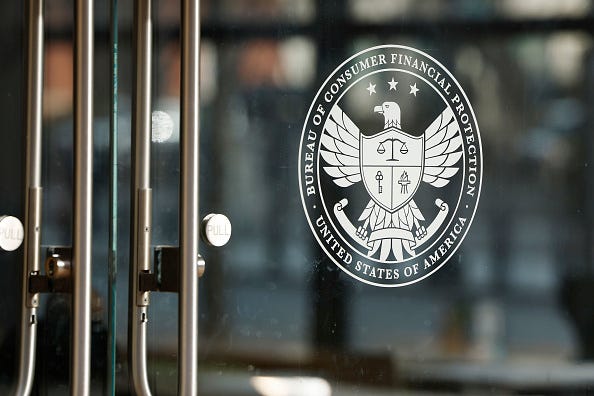
Get Busy: Defenders of the CFPB often argue that the Trump administration’s dismantling of the agency has been a gift to financial firms, but the real story is more nuanced. While there’s no question companies are cheering on the bureau’s deregulatory turn, many still want an active consumer regulator – especially when it comes to cracking down on their competitors.
That “regulation of my enemy is my friend” dynamic pervades a series of letters from leading industry trade groups critiquing a strategic plan drafted under Acting Director Russell Vought. The blueprint contemplates a smaller, less aggressive watchdog concentrated on conservative priorities like combating “unlawful debanking activities.” And it heralds a future where the CFPB is “focusing resources on supporting hard-working American taxpayers, servicemembers, veterans and small businesses.”
While the outline wasn’t exactly panned (except of course by liberal groups and Democrats), organizations representing banks, credit unions and financial technology firms wrote in to suggest a much more proactive course. Some called for the agency to write national rules to pre-empt a state patchwork of regulations. Others complained that a lighter supervisory touch would only help less-regulated rivals. Perhaps most strikingly, the finance advocates bolstered their case by singing the CFPB’s praises – using language that was noticeably different from the brickbats they directed at the regulator during the Biden years.
“The bureau was created to do something no prior federal regulator had done: ensure that consumers receive consistent protections regardless of where they obtain financial products and services,” extolled Consumer Bankers Association President Lindsey Johnson. The American Bankers Association’s Hallee Morgan agreed, proclaiming the agency’s uniquely broad authority a “cornerstone” of the 2010 Dodd-Frank Act.
The executives took special issue with a CFPB proposal to “shift the focus of supervisory activity to depository institutions, as opposed to non-depository institutions.” The change, they argued, would leave many mortgage companies, fintech lenders and mobile payment firms without a federal overseer. “Non-banks play a central role in the financial lives of most Americans across a wide range of products,” Johnson noted. “The only regulator that can supervise or examine their behavior is the CFPB.”
Funny enough, Democratic state attorneys general made the same point. “States and other regulators cannot fill the gap if the CFPB reduces its supervision of non-bank companies,” wrote Illinois’ Kwame Raoul and 22 others.
ACA International, which represents debt collection companies, had a different take. It stressed that the bureau should “concentrate its supervisory resources on those who were responsible for the Great Recession…complex global systemically important banks.”
There’s a good chance that the pleas for new rules and stepped-up oversight won’t be embraced by Vought, who has long made clear he has no use for the administrative state. But they do provide a window into how financial firms will approach the next several years of grappling with the beleaguered regulator. What follows are a few of the highlights…(Thursday)
Click here to subscribe and read the full story.
Dialing Back: Acting on a request from Trump, the SEC proposed allowing public companies to issue financial reports twice a year instead of quarterly. The shift would end a mandate that has stood for more than five decades with few complaints from companies or market participants. But it has been a pet peeve of the president, who called on the SEC to make the change in a social media post last fall.
The plan, approved unanimously by the agency’s three Republican commissioners, is strictly voluntary. And how many companies will opt for fewer reports is largely guesswork at this point. The SEC itself was unable to come up with a solid estimate, though it said smaller corporations, particularly those in the biotechnology industry, may find the reduced cadence attractive.
“The rigidity of the SEC’s rules has prevented companies and their investors from determining for themselves the interim reporting frequency that best serves their business needs and investors,” Chairman Paul Atkins said in a statement. “Today’s proposed amendments, if ultimately adopted, would provide companies with increased regulatory flexibility in this regard.”
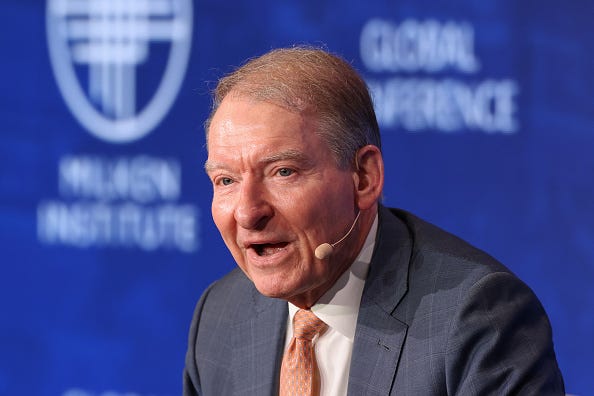
Atkins, who put the policy on a fast track after Trump’s post, has billed it as part of a broader initiative to ease regulatory burdens on corporations and make IPOs “great again.” He stressed that the proposal is “just the first step of the larger, comprehensive effort to review and reshape the current SEC rules governing public companies with respect to their ongoing reporting obligations and their ability to raise capital in the public markets.”
Commissioner Hester Peirce agreed that farther-reaching fixes may be in order. She noted that while companies could choose to continue following the current system, many of them find their disclosure obligations “quite onerous.” A focus on “slimming down” the form for the quarterly releases, known as 10-Q, “could be helpful,” she said.
In a break with its longstanding tradition of holding public meetings to issue major rules, the commission voted behind closed doors to put the proposal out for 60 days of public comment. No Democrats are on the SEC to take the other side, but the effort is likely to draw a significant amount of feedback, including from investors concerned that the agency is curtailing important information they need for buying and selling stock. A court challenge isn’t out of the question.
The SEC has explored allowing semiannual reporting before, under Chairman Jay Clayton. (A Trump tweet in 2018 similarly sparked that attempt.) But the project was ultimately abandoned after the idea provoked widespread opposition from most corners of the financial industry…(Tuesday)
Click here to subscribe and read the full story.
